
At a glance
The two numbers are measuring different things
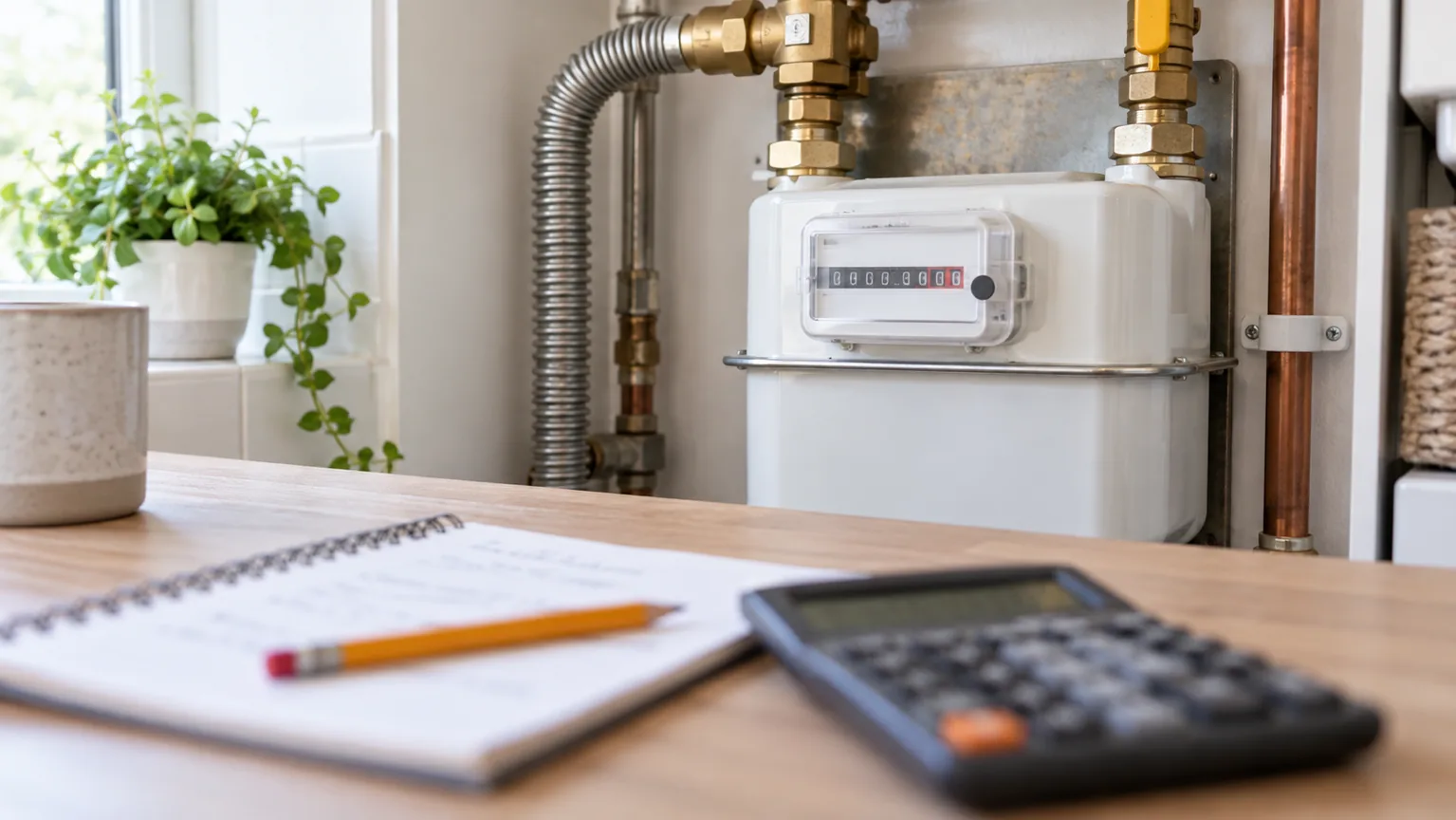
A gas meter records how much gas passes through it by volume. A modern metric meter displays cubic metres (m³); an older imperial meter displays cubic feet (ft³), normally in hundreds of cubic feet for billing. Your supplier cannot price those volumes directly because a cubic metre of gas does not always contain exactly the same amount of usable heat.
The bill therefore converts the volume into kilowatt hours (kWh), a measure of energy. That puts gas on a consistent energy basis before the unit rate is applied. It also explains a common source of alarm: using 24 cubic metres does not mean the bill should show 24 kWh. The converted energy figure will be much larger.
The conversion is not a rough trick invented by a supplier. GOV.UK explains that the method and factors are prescribed by the Gas (Calculation of Thermal Energy) Regulations 1996.
Start by identifying metric or imperial
Look for the unit printed beside the meter display. “m³” means metric. “ft³” means imperial. Do not decide from the shape or age alone, and do not use the coloured digits after a decimal as part of a normal supplier reading unless your supplier specifically asks for them.
For usage, subtract the previous whole-number reading from the current one. Include leading zeroes when submitting the reading itself, but they make no difference to the subtraction. If the meter has been exchanged, do not subtract a reading from the old meter from one on the new meter; use the closing and opening readings recorded at the exchange.
Our illustrated gas meter guide covers digital, dial and smart displays. The key fact for this calculation is the unit marked on the fixed meter.
The metric gas conversion, line by line
For a metric meter, start with cubic metres used. Multiply by the volume correction factor of 1.02264, multiply by the calorific value printed on the bill, then divide by 3.6 to convert megajoules to kWh.
Metric formula: cubic metres used × 1.02264 × calorific value ÷ 3.6 = kWh.
Take an example where the readings moved from 12,406 to 12,430. That is 24 m³. Using an illustrative calorific value of 39.5 MJ/m³, the calculation is 24 × 1.02264 × 39.5 ÷ 3.6 = 269.30 kWh. At 7.97p per kWh, the usage charge would be £21.46 before adding the standing charge. The current rate is used only to show the final pricing step; use the tariff rate and calorific value on your own bill.
| Step | Calculation | Result |
|---|---|---|
| Meter usage | 12,430 − 12,406 | 24 m³ |
| Corrected volume | 24 × 1.02264 | 24.54336 m³ |
| Energy before kWh conversion | 24.54336 × 39.5 | 969.46 MJ |
| Kilowatt hours | 969.46 ÷ 3.6 | 269.30 kWh |
| Illustrative usage cost | 269.30 × £0.0797 | £21.46 |
Intermediate figures shown for clarity; the final calculation should use unrounded values.
The extra step for an imperial meter
An imperial billing reading usually represents hundreds of cubic feet. Before using the metric formula, multiply the units used by 2.83 to convert them to cubic metres. Then apply the same volume correction, calorific value and 3.6 divisor.
Imperial formula: imperial units used × 2.83 × 1.02264 × calorific value ÷ 3.6 = kWh.
If an imperial meter moves by 8 units, the volume used for the next step is 8 × 2.83 = 22.64 m³. With the same illustrative calorific value of 39.5, that becomes 254.04 kWh. At 7.97p per kWh, the illustrative usage cost is £20.25 before standing charge.
The 2.83 factor is often where a very large billing error begins. Applying the metric formula directly to an imperial reading understates the energy, while treating a metric meter as imperial overstates it sharply.
Why the calorific value moves slightly
Calorific value describes the heat energy available from the gas. GOV.UK says transporters must maintain it within 38 to 41 MJ/m³, and the figure on a bill is an average for the gas supplied to the property. It is normal for that value to differ slightly between bills.
That movement is one reason a fixed number of cubic metres will not always convert to exactly the same kWh. It is not the same as the tariff unit rate. Calorific value belongs inside the physical conversion; pence per kWh is applied after the energy figure has been calculated.
Use the calorific value printed for the billing period. Do not copy an example value from this article when checking a real statement.
A sensible way to audit the bill
First check the opening and closing readings, the meter serial number and whether either reading is estimated. Then confirm the meter type and recalculate the kWh without rounding at every line. Finally multiply by the tariff rate and add the daily standing charge for the exact number of days.
A small difference can come from rounding or a different calorific value. A very large difference is more likely to come from the wrong readings, the wrong meter type, an estimated reading or comparing a VAT-inclusive rate with one that excludes VAT.
Our calculator handles the meter conversion and cost steps with your own figures. If the result still does not match, ask the supplier for its full calculation rather than guessing which number it used.
- Do not price raw meter units. Convert the volume to kWh first.
- Do not add VAT twice. Check whether the stated tariff rate already includes it.
- Do not mix meters. A meter exchange needs separate closing and opening readings.
- Do not over-round. Keep full precision until the final kWh and cost figures.
Gas price cap FAQs
How many kWh are in one cubic metre of gas?
There is no single permanent figure because calorific value varies. Using 1.02264 and a calorific value of 39.5 gives about 11.22 kWh per cubic metre, but a real bill should use its stated calorific value.
Why is the kWh figure much higher than my meter units?
The meter shows gas volume while the bill shows energy. One cubic metre of gas contains roughly eleven kWh under typical conversion values, so the figures are expected to differ.
What does 1.02264 mean on a gas bill?
It is the prescribed volume correction factor used to account for the effect of temperature and pressure on gas volume.
Why do imperial meters use 2.83?
Imperial billing units are normally hundreds of cubic feet. Multiplying by 2.83 converts each displayed unit into cubic metres before the energy conversion.
Can I use a fixed conversion factor for every bill?
A shorthand can provide an estimate, but an audit should use the calorific value and other figures shown on the bill because calorific value changes slightly.
Sources
Rates and rules checked on 1 October 2026. Time-sensitive figures should be checked again before use.