
At a glance
The short answer: contact your gas supplier before anyone starts
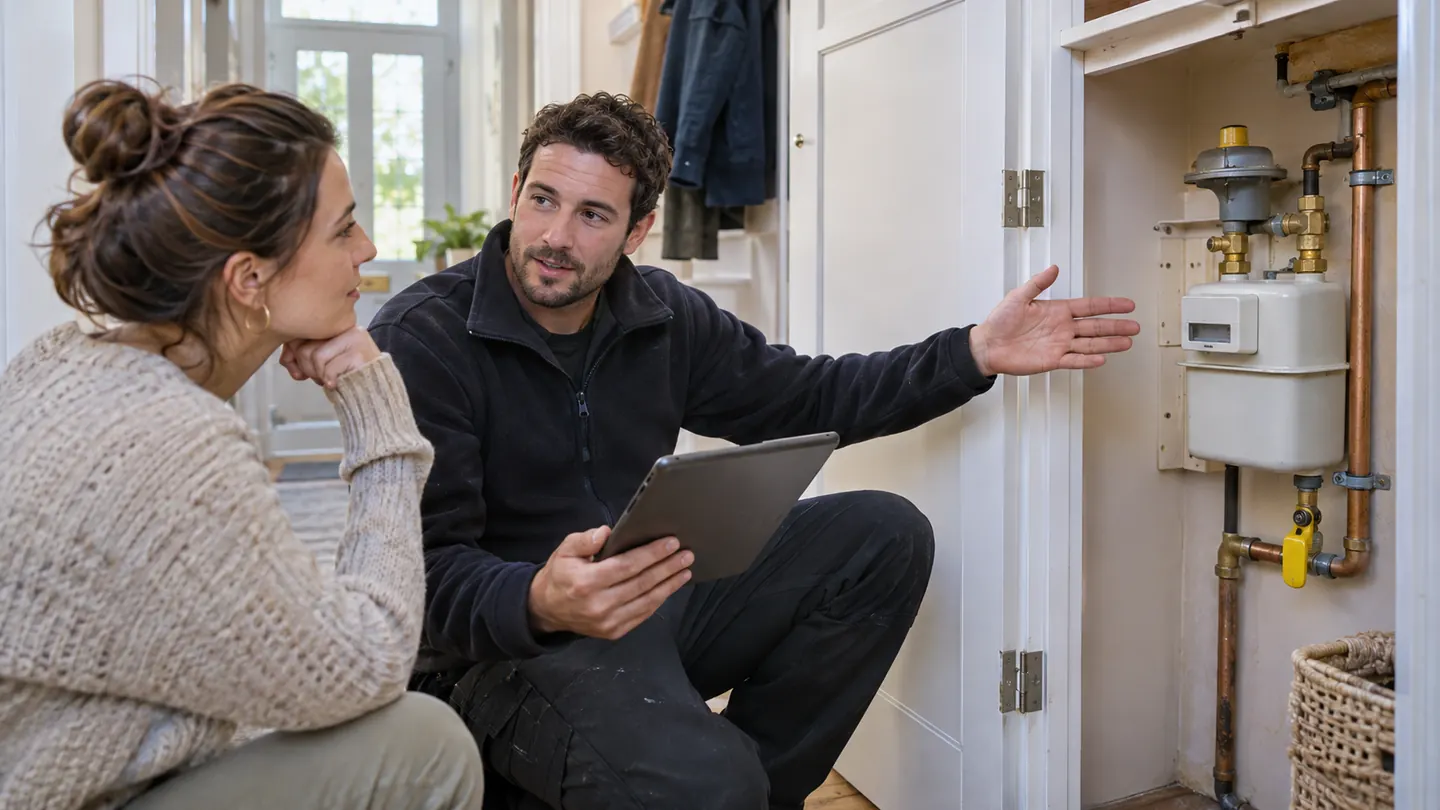
You cannot move a gas meter yourself. Contact the gas supplier named on your bill, explain where the meter is now and where you want it to go, and ask for a written breakdown of who will move the meter, service pipe and internal pipework. A small move may be arranged through the supplier. A longer move, an outside-to-inside change or work affecting the incoming service pipe can also require the local gas network operator.
The meter move is only one part of many projects. A suitably qualified Gas Safe registered engineer may need to reconnect or alter the installation pipework between the meter and boiler, cooker or other appliances. Building work, a new meter box and access preparation may be separate again. Do not book a kitchen fitter or builder on the assumption that one contractor can legally complete every part.
Get the route agreed before cabinets, floors or walls are finished. The final position needs to remain accessible for readings, maintenance and emergency isolation, and the responsible organisations must approve it.
Who is responsible for each part of a gas meter move?
In Great Britain, Citizens Advice says your current supplier is normally the first contact because the supplier usually owns the meter. Whether it can arrange the whole job depends on the existing position, proposed distance, connector and reason for the move. Only your current supplier can arrange supplier-side meter work; changing supplier purely to obtain another quote can also change your tariff, so compare the complete cost and contract.
If the supplier cannot do the work, it should direct you to the local gas network operator, sometimes called the gas transporter. That company owns and maintains the distribution pipe bringing gas to the property. Use the gas transporter shown by Find My Supplier rather than guessing from the name on your bill.
A Gas Safe registered engineer deals with relevant gas installation work inside the property, such as altering installation pipework or reconnecting appliances. Registration alone is not enough for every task: check the engineer’s ID card or the Gas Safe Register for the categories of work they are qualified to carry out. A general builder can prepare an opening or make good afterwards, but must not move the meter or undertake regulated gas work.
| Part of the project | Who to ask first | What to confirm |
|---|---|---|
| Meter and supplier appointment | Current gas supplier | Approved position, scope, price and appointment |
| Incoming service pipe | Local gas network operator | Route, excavation, ownership and reinstatement |
| Pipework after the meter | Qualified Gas Safe engineer | Work categories, testing and appliance reconnection |
| Cupboard, box or building finish | Builder or specialist named in the quote | Dimensions, ventilation, access and making good |
Responsibilities vary with the property and proposed position. Use the written scope for your own project.
How much does it cost to move a gas meter?
There is no reliable flat UK price. The cost depends on distance, whether the service pipe must change, excavation, the type of meter and connector, the new meter box, access, internal pipework and who makes good the building afterwards. Ask for a site-specific written quote and check whether VAT is included.
Citizens Advice says a gas network operator will usually charge at least £400 where it has to do the work, and the total can exceed £1,000 depending on the job. That guidance was checked on 18 November 2026. Treat those figures as a broad warning about scale, not a quotation: supplier charges and network quotations vary, and additional Gas Safe or building work can sit outside them.
Compare quotes line by line. One low figure may cover only disconnecting and refitting the meter, while another includes the service alteration, excavation and reinstatement. Avoid paying a non-refundable building deposit until the meter position and responsibilities have been accepted.
- Meter work: disconnection, relocation, fitting and commissioning.
- Network work: service-pipe alteration, excavation and any road or neighbour access.
- Internal gas work: new installation pipework and appliance reconnection.
- Building work: meter box, cupboard changes, access panels and making good.
- Project costs: surveys, permits, parking restrictions or aborted visits where applicable.
Plan the move in the right order
Begin with photographs and measurements that do not require touching the meter or pipework. Show the current meter, proposed location, nearby doors, cupboards and the route between them. Give the supplier an honest description of planned building work and whether the meter is difficult to reach.
Ask the supplier to confirm whether it can arrange the move. If the network operator must alter the service, obtain that design and quote before fixing the internal layout. Then ask a suitably qualified Gas Safe engineer to plan the downstream pipework. The parties may need separate visits, so identify which job must happen first and who will leave the supply safely isolated between stages.
For example, a kitchen refit that moves a meter from a low cupboard to an outside box might involve the network operator changing the service entry, the supplier arranging the meter, a Gas Safe engineer rerouting internal pipework and a builder forming and finishing the box opening. The exact allocation can differ, but a single written sequence prevents each contractor assuming another has covered the missing step.
Before the appointment, clear safe access without removing seals, covers or pipes. Record the meter reading and serial number. After the work, keep the old closing reading, new opening reading and any replacement meter serial number, then check them against the next bill. The gas meter reading guide explains which digits to record, and the gas bill calculator can help you sense-check later usage.
Help with access, prepayment meters and rented homes
Tell the supplier if the existing meter is unsafe or impractical for you to reach. Citizens Advice says a supplier should move a prepayment meter free of charge when the move is needed for a customer on the Priority Services Register. The precise solution depends on individual needs; a smart meter or supplier meter-reading help may sometimes solve the access problem without construction. Read the Priority Services Register guide for eligibility and services in Great Britain.
If you rent, get the landlord’s written agreement before requesting alterations. The landlord is responsible for the safety of gas fittings and pipework they provide, while the supplier and network operator still control their respective equipment. Agree who will pay, who will appoint contractors and how gas-safety records will be updated after the work.
Northern Ireland has a separate gas market and customer-support arrangements. Contact your gas supplier first; the Utility Regulator lists suppliers by network area. Ask the supplier to identify the relevant network operator and the approved process rather than assuming Great Britain’s commercial arrangements or Priority Services Register rules apply unchanged.
Checks to make before and after the appointment
Confirm the proposed position, scope, price, payment schedule, access requirements and responsibility for making good in writing. Check cancellation and aborted-visit charges. If several companies are involved, put their order and handover contacts on one page.
For a supplier appointment in Great Britain, Citizens Advice says the supplier should offer a workable appointment and must pay £40 compensation for specified failures such as missing it, making a late unagreed change or sending someone without the right qualifications or tools. It should pay within 10 working days; a further £40 can be due if that payment is late. Check the current rule against the source when claiming because consumer standards can change.
After completion, make sure the emergency control remains accessible, pipework is secure and the supply has been tested by the responsible qualified person. Do not accept a request to reconnect or test gas yourself. If you smell gas at any stage, stop and follow the gas emergency steps rather than calling the project contractor first.
Frequently asked questions
Can a plumber move my gas meter?
Not simply because they are a plumber. Start with your current gas supplier. Work on relevant gas fittings must be done by a Gas Safe registered engineer qualified for that category, while service-pipe work may belong to the gas network operator.
Can I move a gas meter myself?
No. Do not break seals, disconnect the meter or alter gas pipework. The supplier, network operator and suitably qualified Gas Safe engineer must cover the parts they are responsible for.
How far can a gas meter be moved?
There is no safe universal distance. The existing connector, service route, proposed position and ownership of each pipe determine who can do the work. Give the supplier measurements and ask for a site-specific decision.
Will my gas be turned off during the move?
Yes, the supply normally needs to be safely isolated while meter or pipework work is carried out. Ask how long the interruption is expected to last and who will test and restore the supply.
Who pays to move a gas meter in a rented home?
Agree this with the landlord in writing before work is booked. Responsibility can depend on why the move is needed and what the tenancy says; the supplier and network operator still control work on their equipment.
Sources
Rates and rules checked on 18 November 2026. Time-sensitive figures should be checked again before use.