
At a glance
The short answer: check it cool, then use the manual
Boiler pressure is the pressure of the water circulating through a sealed central-heating system. It is not the pressure of the gas entering your home. Energy Saving Trust says the ideal boiler pressure should usually be between 1 and 1.5 bar, but the correct range and filling method for your model are the ones in its user manual.
Read the gauge or digital display when the heating has cooled. Pressure normally rises as the water heats and expands, so comparing a hot reading with yesterday’s cold reading can make a normal change look like a fault. Record the state of the heating with each reading.
A single low reading after radiators have been bled may need careful re-pressurising if the manufacturer permits a user to do it. A sudden or repeated fall, a persistent high reading, water leaking from the system or a control you cannot identify is a reason to stop and arrange professional help.
How to read boiler pressure without guessing
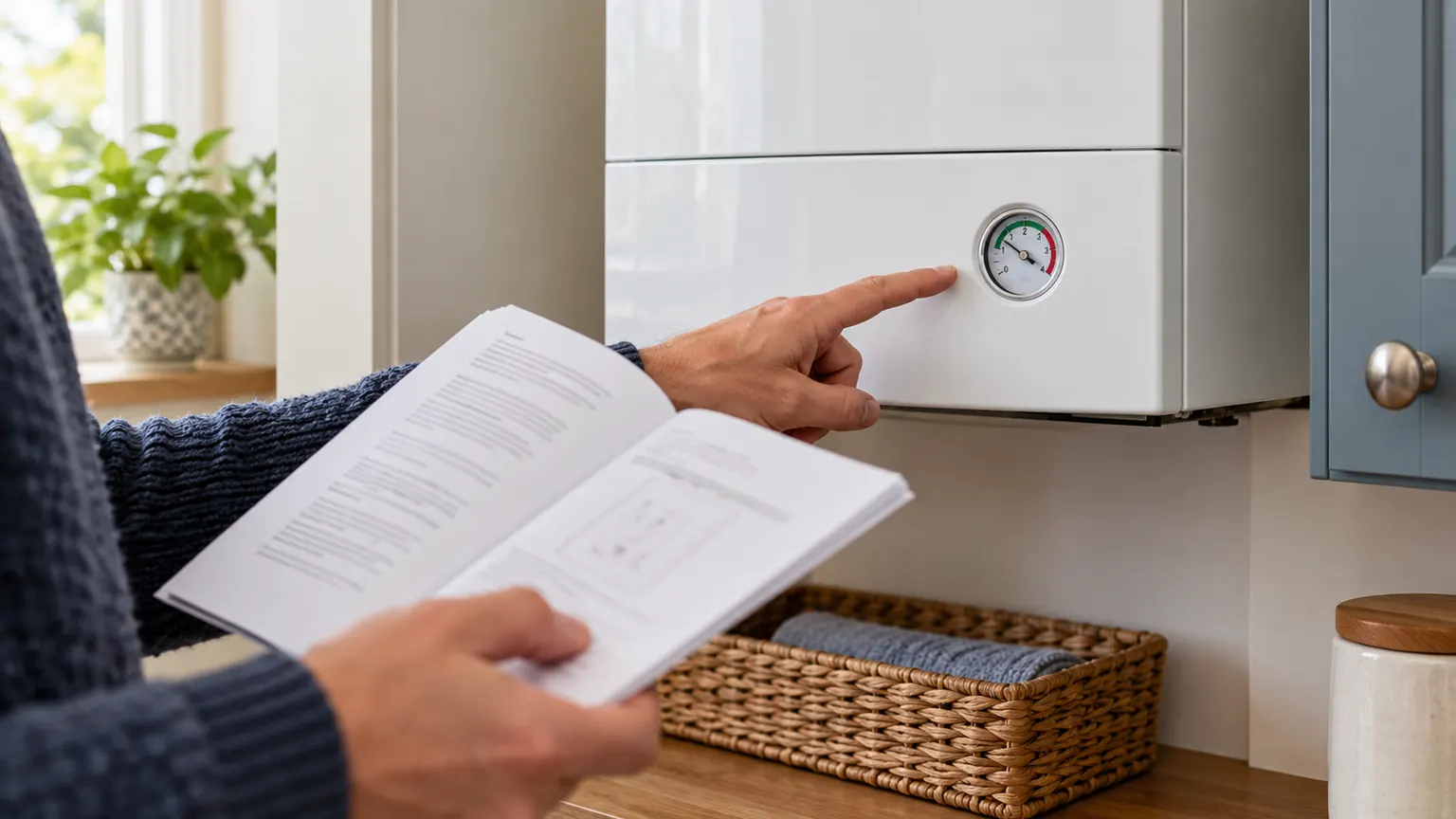
Find the pressure gauge or pressure screen without removing the boiler casing. An analogue gauge is usually marked in bar; a digital boiler may show pressure in a status menu. Do not rely only on coloured zones because their limits vary by model. Find the make and model on the outside of the boiler and use the matching manufacturer’s manual.
Switch the heating off and allow the system to cool before taking a baseline reading. Note the pressure, date, time and whether radiators were recently bled. Take a second reading under the same cool conditions if you are checking whether pressure is drifting rather than reacting to one snapshot.
The pressure gauge cannot tell you how much gas the boiler has used. For that, compare gas meter readings or billed kWh. Enter two dated readings and your tariff in the gas bill calculator, or use the boiler running-cost guide to measure a heating period.
- Keep the casing closed: use only the external gauge, display and documented user controls.
- Compare like with like: record cold readings against other cold readings.
- Use the exact manual: a filling loop or key that is normal on one boiler may be different on another.
- Photograph the display: an error code and pressure reading help a landlord or engineer understand the fault.
What to do when boiler pressure is low
Low pressure can stop a boiler from heating properly or trigger a fault code. Energy Saving Trust notes that pressure commonly falls after radiators are bled. It also warns that a sudden drop can indicate a leak in a radiator or underfloor-heating system and should be inspected by an engineer.
First check for an obvious water leak around visible radiator valves, pipe joints and beneath the boiler without opening the casing. Protect the floor if needed, switch the heating off and arrange a repair. Do not keep adding water to conceal a repeated pressure loss: the falling reading is evidence of a problem that needs finding.
If there is no leak and the manual explicitly describes user re-pressurisation, follow that model-specific procedure with the boiler off and cool. Stop at the manual’s stated pressure, close the filling controls fully and recheck. If the controls are unfamiliar, inaccessible, seized or not described as a user task, leave them alone and contact the manufacturer, landlord or a competent engineer.
What to do when boiler pressure is high
A warm system will normally read higher than a cool one. Let it cool before deciding that pressure is excessive. If the cold reading remains above the range in the manual, or climbs into the boiler’s warning zone each time it heats, arrange an engineer’s assessment. Energy Saving Trust advises having high pressure checked by an engineer.
Do not operate a pressure-relief valve, drain water from the boiler or loosen fittings as an improvised fix. Those actions can cause leaks or damage and may not address the underlying fault. Also check that any filling control you used is fully closed, but do not force it.
If water is escaping, the display shows a persistent fault, or heating and hot water are unreliable, switch the boiler off if it is safe to do so and report the fault. A manufacturer or Gas Safe registered engineer can interpret the readings for the specific appliance and system.
Use a short pressure log to describe the problem
A simple log is more useful than saying the gauge “keeps moving”. Record two or three comparable readings and what the system was doing. Do not delay a repair to complete the log if there is a leak, an unsafe-appliance warning, a gas smell or a carbon monoxide alarm.
For example, a cool reading of 1.2 bar that rises while heating and returns close to 1.2 bar after cooling is a different pattern from a cool reading that falls from 1.2 to 0.6 bar across several days. The first observation alone does not diagnose a fault; the second is useful evidence of repeated pressure loss.
Pressure is only one diagnostic clue. Error codes, sounds, visible water, recent radiator work and which rooms fail to heat all help. Give the engineer or landlord the observations without claiming a cause.
| Record | Example | Why it helps |
|---|---|---|
| Pressure and time | 1.2 bar at 08:00 | Shows the size and timing of a change |
| System state | Heating off and cool | Makes readings comparable |
| Recent event | Radiators bled yesterday | Provides relevant context |
| Other evidence | Fault code and visible drip | Helps the fault be triaged safely |
Examples describe observations, not universal safe limits. Use the range in the boiler manual.
Know when to stop and call an engineer
HSE says anyone employed to work on a domestic gas appliance must be Gas Safe registered and competent for that type of work. Check the engineer’s ID card and that “boilers” appears among their current categories. Do not remove the casing or attempt work on gas, combustion or flue components yourself.
Arrange help for pressure that keeps falling after re-pressurisation, pressure that stays high when cool, a leak, repeated fault codes, or a boiler that will not provide reliable heat or hot water. If you suspect the appliance is unsafe, HSE says to turn it off and not use it until a Gas Safe registered engineer has checked it. Follow the separate gas emergency guide immediately for a gas smell or sounding carbon monoxide alarm.
If you rent, report the fault promptly in writing and keep the pressure photos and error codes. Citizens Advice says a landlord is responsible for repairing or replacing the supplied boiler; tenants should not try to fix it themselves. Regional housing rules differ, so use the Citizens Advice page for your UK nation if a repair is delayed.
Check comfort and gas use separately after the fault is fixed
Restoring the correct pressure helps the heating system operate as designed, but it does not prove a particular bill saving. Weather, thermostat schedules, hot-water demand and tariff rates can all change the cost. Keep pressure checks and gas-usage checks as separate measurements.
After repair, take gas meter readings over a representative period and note the weather and heating schedule. Avoid changing several controls at once, and use the high gas bill checklist if the billed kWh still looks unexpected.
Regular servicing is not the same as repairing an active pressure fault. HSE strongly advises regular maintenance and at least annual servicing of gas appliances by a Gas Safe registered engineer. See what should be checked in the gas boiler service guide.
Frequently asked questions
What should boiler pressure be when the heating is off?
Energy Saving Trust says ideal boiler pressure should usually be between 1 and 1.5 bar. Treat that as general guidance: check the cold-pressure range in the manual for your exact boiler.
Is it normal for boiler pressure to rise when heating is on?
Some rise is normal because heated water expands. Compare cold readings with cold readings. A large rise into the warning zone or pressure that stays high after cooling needs professional advice.
Why does my boiler pressure keep dropping?
Bleeding radiators can lower pressure, but a repeated or sudden drop can indicate a water leak or another system fault. Do not repeatedly top it up without having the cause checked.
Can low boiler pressure increase my gas bill?
The gauge does not measure gas use, and pressure alone cannot prove why a bill changed. Fix the fault, then compare actual gas meter readings, heating schedules and weather over a representative period.
Can I re-pressurise a boiler myself?
Only if the manufacturer’s instructions for your exact model clearly present it as a user task and you can identify every control. Work with the boiler off and cool, stop at the stated pressure and call an engineer or landlord if anything is unclear.
Sources
Rates and rules checked on 19 October 2026. Time-sensitive figures should be checked again before use.