
At a glance
The short answer: check three identifiers before disputing the bill
First confirm that the bill is for your address and gas supply point. Compare its meter serial number with the serial on the physical meter, then compare the dated bill readings with that meter’s display. A mismatch is evidence for your supplier; a high balance alone is not proof of a crossed meter.
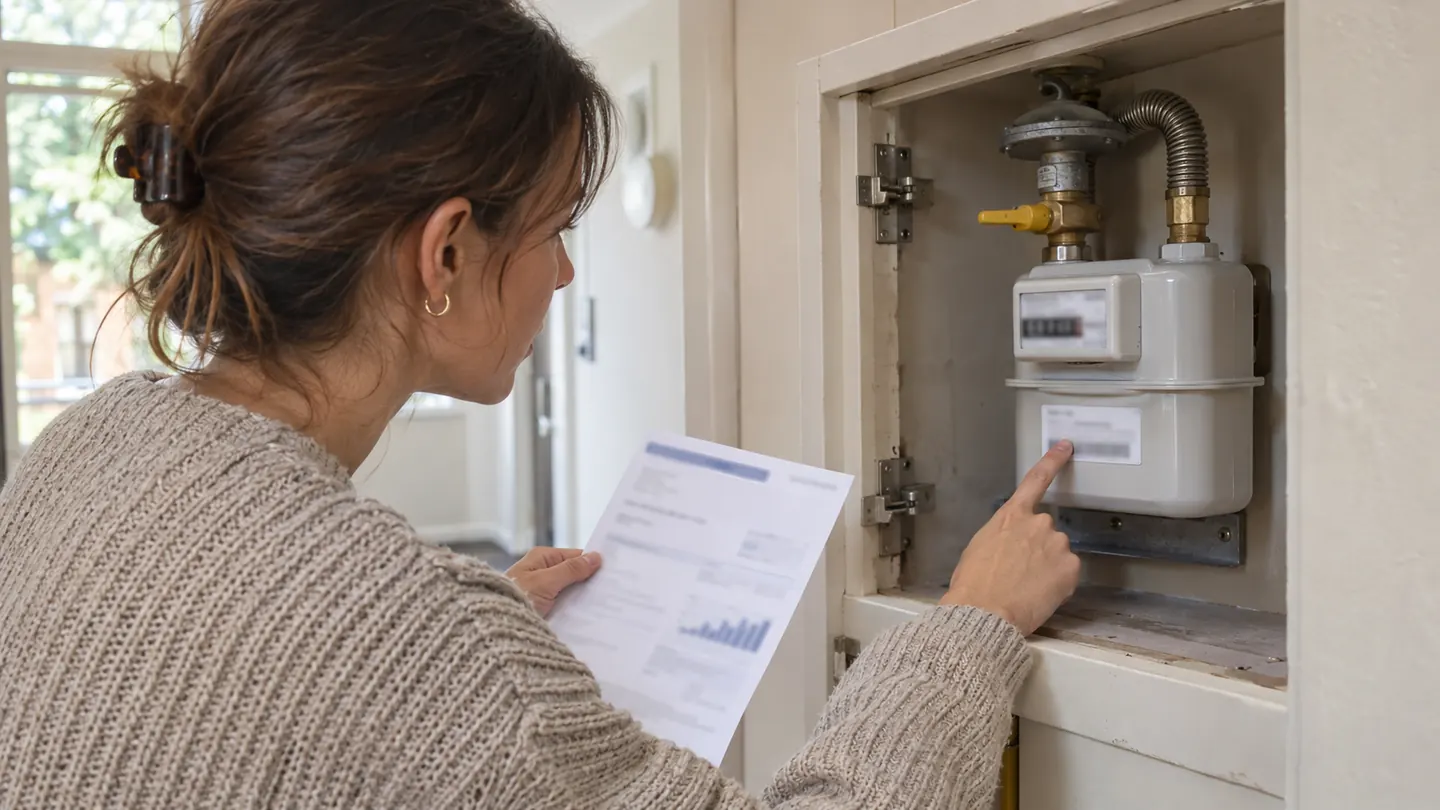
Photograph the whole meter, serial-number label and current reading. Keep the latest bill and note the date, time and meter location. Ask the billing supplier to investigate its registered supply details before changing payments or attempting to identify pipework yourself.
Do not remove seals, turn valves in a shared meter cupboard or alter labels. Ofgem says suspected meter damage or tampering should be reported to the supplier and not repaired by the householder.
MPRN and meter serial number are not the same thing
In Great Britain, the Meter Point Reference Number, or MPRN, identifies the gas supply point at a property. It is normally shown on the bill, but not on the front of the physical meter. The Meter Point Administration Service’s Find My Supplier service can return the registered MPRN, supplier and gas transporter for an address.
The meter serial number identifies the actual meter. It is usually a mixture of letters and numbers near a barcode or manufacturer’s plate and should appear on the bill. A replacement meter can have a new serial while the property keeps the same supply-point reference.
Bills use labels such as “Meter Point Reference”, “MPRN”, “gas supply number”, “meter ID”, “MSN” or “meter serial number”. If the bill is unclear, ask the supplier to state both numbers.
| Detail | What it identifies | Where to check |
|---|---|---|
| Supply address | The home being billed | Bill and supplier account |
| MPRN | The Great Britain gas supply point | Bill and Find My Supplier |
| Meter serial number | The physical gas meter | Bill and meter label |
| Meter reading | The register value on a stated date | Bill and meter display |
Northern Ireland gas bills use a Supply Meter Point Number rather than Great Britain’s MPRN process.
Check whether the bill and meter really disagree
Work through the checks in order. This prevents a normal estimated reading, a delayed meter-exchange update or a bill for the wrong account period being mistaken for a crossed meter.
- Address and dates: confirm the supply address, billing period and account holder before comparing any readings.
- MPRN: for a Great Britain property, compare the bill’s number with the address result from Find My Supplier. If they differ, save both results and contact the supplier.
- Serial number: compare every character on the bill with the label on the meter. Photograph the full meter as well as a close-up so its location is clear.
- Reading type: check whether each bill reading is marked actual, customer, smart or estimated. An estimate is not supposed to equal today’s display.
- Meter units: note whether the meter is marked m³ or ft³. A unit-record error can make the conversion wrong even when the serial number matches.
- Recent exchange: if the meter was replaced, look for the old meter’s final reading, the new meter’s opening reading and both serial numbers on the first bill after the work.
Worked example: a large reading difference is not enough
Suppose a statement closes at 18,450 on 15 November, while the visible meter shows 00736 on 22 November. Those figures might belong to different meters, the visible meter might be new, or the statement might contain an estimate.
Start with the identifiers. If the serial on the bill is ABC123 and the meter label is ABC123, check the bill dates, reading type and any meter-exchange information. If the bill says ABC123 but the meter is XYZ789, photograph XYZ789 and send the mismatch to the supplier. Ask it to confirm which serial and MPRN are registered to your address, the date each meter was installed, and which readings it used for the charges.
Once the supplier confirms the correct meter and readings, use the gas bill calculator to check the consumption and charges. Do not try to make unlike register figures agree by adding zeros or applying a conversion factor before the meter identity and units have been confirmed.
Send the supplier evidence it can act on
Ofgem directs customers to their supplier for incorrect bills, overcharging and meter problems. Give the account number, address, MPRN if applicable, meter serial, current reading and date. Attach the meter photos and the relevant bill page. In a block of flats, describe the cupboard without photographing neighbours’ information.
Ask for a reference and a written answer confirming the supply point, registered serial, billed readings and any missing meter exchange. If several meters may be involved, tell the landlord or managing agent, but leave supply identification to the supplier and qualified meter workers.
Continue taking dated readings while the investigation is open. Do not submit a neighbour’s reading, guess a replacement figure or cancel a payment without discussing it with the supplier. If the current charge is unaffordable, ask for a temporary affordable arrangement while the disputed usage is checked.
Check the corrected bill, not just the account balance
Ask for a replacement statement after the records are fixed. Check the serial, opening and closing readings, metric or imperial conversion, and standing-charge days. The gas meter reading guide explains which digits to record; the estimated-bill guide covers the right meter with a wrong estimate.
A corrected meter link can produce either a refund or an amount still due; the outcome depends on the energy actually supplied and payments already made. If the correction creates charges for older usage, check the 12-month back-billing rules. Do not assume they cancel every older charge: Ofgem’s protection depends on why accurate billing did not happen and whether the customer acted unreasonably.
If the supplier does not investigate, will not explain the correction or keeps billing the wrong meter, make a formal complaint with the same evidence. In Great Britain, Ofgem says the Energy Ombudsman route is available after a deadlock letter or when eight weeks have passed without resolution. The site’s gas-bill complaint guide sets out the escalation steps.
Northern Ireland uses different gas-supply records
Ofgem and Great Britain’s Find My Supplier service do not govern Northern Ireland gas accounts. Northern Ireland gas bills use a Supply Meter Point Number, or SMPN, and the available supplier depends on the distribution area. Start by comparing the bill’s meter details and reading with the physical meter, then contact the supplier named on the statement.
The Consumer Council for Northern Ireland advises customers to give regular readings and contact the supplier for help with a bill or meter. If the supplier does not resolve the issue through its complaints process, the Consumer Council can assist with natural-gas complaints. Keep the same photo, bill and contact record you would use for a Great Britain investigation.
Frequently asked questions
Where is the gas meter serial number?
It is normally printed on the front of the meter near a barcode or manufacturer’s plate. It can contain letters and numbers. Compare every character with the meter serial or MSN shown on the bill.
Is the MPRN printed on the gas meter?
Normally no. The MPRN identifies the Great Britain gas supply point and appears on the bill or Find My Supplier result. The number printed on the physical meter is its serial number.
Why does my bill show an old meter serial number?
The record may not reflect an exchange, or the bill may cover the older meter. Ask for the old final reading, new opening reading, installation date and a corrected statement if needed.
Can I turn off a shared gas meter to see which flat it serves?
Do not operate a meter, valve or pipework that you cannot confidently identify as yours. Give the supplier and building manager the serial-number evidence and ask them to arrange a safe identification check.
Does a very high gas bill mean I have a crossed meter?
Not necessarily. High use, estimates, tariff changes, unit-record errors or debt can also raise a bill. Look for a mismatch in the supply-point record, serial number or readings.
Sources
Rates and rules checked on 22 November 2026. Time-sensitive figures should be checked again before use.
- Citizens Advice: check if an energy bill is for the wrong meter
- Meter Point Administration Service: Find My Supplier and MPRN
- EDF: identify a meter by its serial number
- Ofgem: complain about an incorrect bill or meter problem
- Ofgem: what to do if a meter may be damaged or tampered with
- Consumer Council: Northern Ireland bills and metering