
At a glance
The short answer: replace the estimate with a real reading
If a gas bill uses an estimated meter reading, take a fresh reading from the physical meter and send it to the supplier. Keep a dated photograph and the submission confirmation. The next bill or statement should use the reading if the supplier accepts it as reasonably accurate, but you should still compare the revised opening and closing readings, tariff rates and dates with your records.
An estimate is not automatically an overcharge. It can be too high or too low. A low estimate may create a catch-up charge when the account is brought up to date; a high estimate may leave the account in credit or make a payment look larger than the gas actually used.
Do not wait for a quarterly bill if the gap is growing. A monthly reading is a practical way to keep a non-smart meter account aligned with actual use. If a smart meter has stopped sending readings, submit them manually until the communications problem is fixed.
How to tell whether the gas bill is estimated
Find the meter-reading section rather than relying on the bill total. Suppliers commonly put an “E”, the word “estimated” or another status label beside the opening or closing reading. One reading may be actual while the other is estimated, so check both ends of the billing period.
Compare the closing figure with the fixed gas meter, not only with an in-home display. Also check the meter serial number on the bill against the number printed on the meter. A reading from the wrong meter or a transposed number needs investigation; it is not solved by simply estimating a different amount.
Remember that a reading taken today will normally be higher than a bill that closed several days ago. Compare dates before treating that gap as an error. The useful question is whether the billed figure is plausible for the earlier closing date. A photograph taken on the day you receive the bill gives the supplier a firm point from which to review its estimate.
Our gas meter guide shows which digits to record on metric, imperial, smart and dial meters. Record the main whole-number digits unless the supplier specifically asks for decimals or coloured digits.
- Reading status: actual, customer, smart or estimated.
- Meter identity: serial number and, where relevant, the property’s MPRN.
- Billing period: the exact opening and closing dates.
- Tariff: unit rate and standing charge, including any mid-period change.
Submit an accurate reading without creating a new dispute
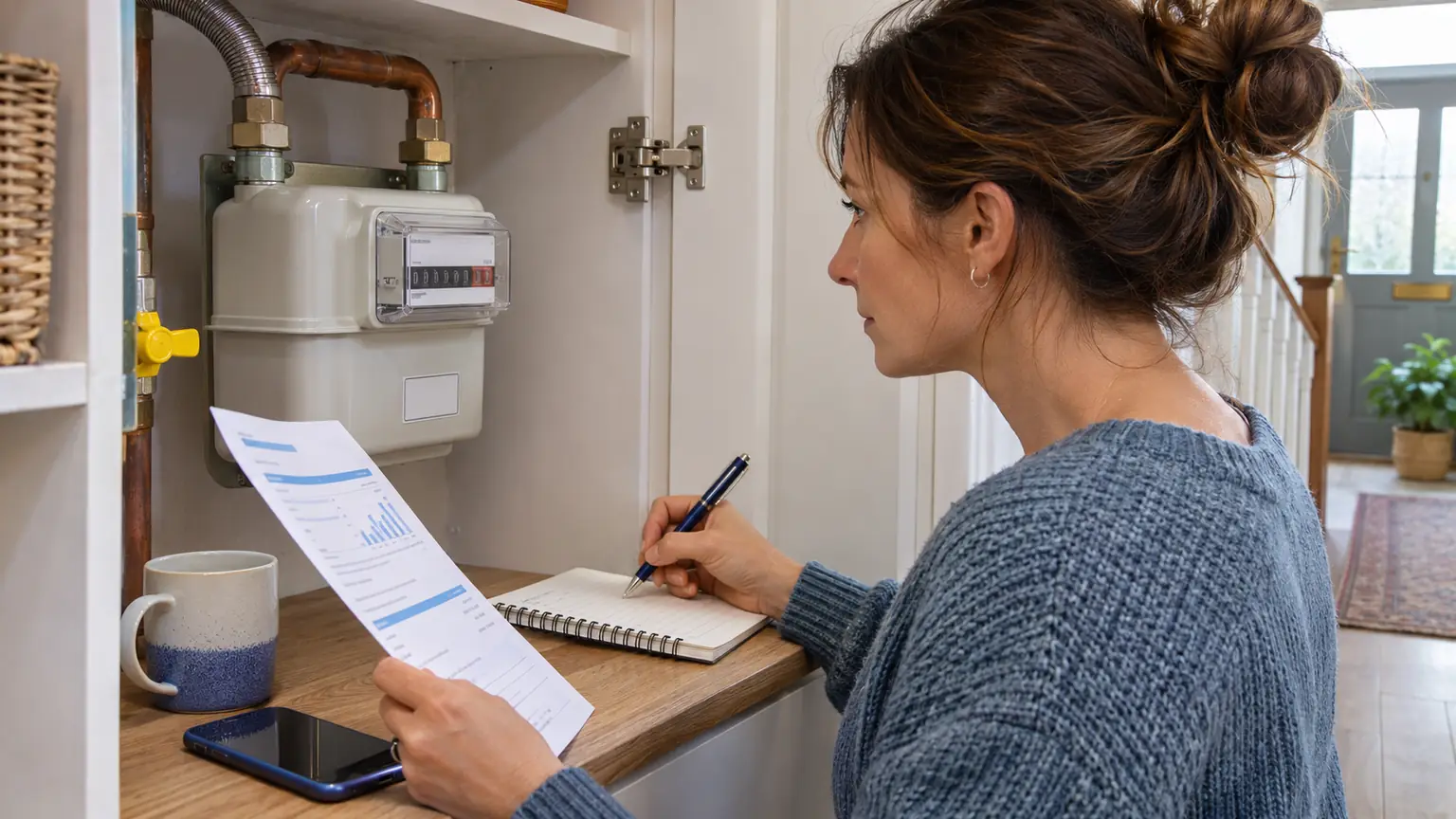
Take the reading in good light and photograph the display and enough of the meter to identify it. Note the date and time. If the display cycles through several screens, follow the supplier’s meter-specific instructions and make sure you have selected the gas register rather than an electricity or usage-cost screen.
Send the reading through the supplier’s app, website or phone service. Save the confirmation, reference number or screenshot. If the supplier rejects the reading as implausible, ask what figure it expected and provide a new photograph rather than repeatedly entering slightly different numbers.
Ofgem’s gas supply licence conditions say a supplier must take all reasonable steps to reflect a customer reading it considers reasonably accurate in the next bill or statement. If it does not consider the reading reasonably accurate, it must take reasonable steps to contact the customer for a new one. Those are Great Britain rules; Northern Ireland suppliers operate under separate Utility Regulator licences.
Check the corrected bill line by line
A revised total is not enough evidence that the correction is right. Match the accepted reading to the bill, then subtract the previous actual reading to find the gas units used. Confirm that the supplier has not treated a metric meter as imperial or joined readings from two different meters after a meter exchange.
Next check the conversion to kilowatt hours and the price. Our gas units to kWh guide explains the metric and imperial formulas. Enter the two readings, billing days and tariff figures in the gas bill calculator for an independent estimate. Small differences can come from calorific value or rounding; a large difference needs an explanation.
If the account uses a fixed monthly Direct Debit, the payment and the bill are different figures. The supplier may spread forecast annual cost and an existing debit or credit balance across future payments. Correcting the bill should update the account balance, but it may not make the next Direct Debit equal to that month’s gas use.
| Bill item | Estimated bill | After actual reading |
|---|---|---|
| Previous actual reading | 4,120 | 4,120 |
| Closing reading | 4,180 estimated | 4,165 actual |
| Gas used | 60 metric units | 45 metric units |
| Difference to recalculate | — | 15 metric units less |
This example shows meter units, not kWh or pounds. The supplier must still convert the corrected usage and apply the tariff for the relevant dates.
What if the estimate was too low and the new bill jumps?
A catch-up bill can be legitimate when earlier estimates understated actual use. Check how long the estimates ran, which periods the adjustment covers and whether previous payments have been credited. Ask the supplier for a calculation if the bill does not show the trail clearly.
Great Britain’s back-billing protection can restrict charges for energy used more than 12 months earlier when the supplier failed to bill correctly and the customer was not at fault. It does not erase every catch-up bill. Our separate gas back-billing guide explains the conditions and the different Northern Ireland position.
If the corrected amount is right but unaffordable, contact the supplier promptly and propose a payment based on what you can manage. Do not cancel a Direct Debit or ignore the bill without first understanding how that affects the tariff, arrears and payment plan.
Escalate when the supplier still uses the wrong reading
Send a concise written complaint with the bill date, disputed readings, meter serial number, photograph, submission confirmation and the correction you want. Ask the supplier to mark the amount as disputed while it investigates and to explain any reading it has rejected.
If a smart meter keeps producing estimates, use the steps in our smart gas meter guide. If the physical meter itself appears to record incorrectly, follow the separate faulty-meter process instead of assuming a communications problem.
In Great Britain, an unresolved complaint can normally go to the Energy Ombudsman after eight weeks or when the supplier issues a deadlock letter. In Northern Ireland, contact the supplier first and then the Consumer Council for help with an unresolved gas-billing complaint.
Frequently asked questions
What does E mean beside a gas meter reading?
It usually means the supplier estimated that reading rather than receiving an actual customer, meter-reader or smart-meter reading. Check the bill legend because formats differ.
Will submitting a meter reading change my bill immediately?
Not always. The supplier may show an updated balance online first or use the accepted reading on the next bill or statement. Keep the submission confirmation and check the revised figures.
Can an estimated gas bill be lower than the real cost?
Yes. Estimates can be too high or too low. If actual use was higher, the next accepted reading can create a catch-up charge.
Why is my smart gas bill estimated?
The meter may still record gas correctly but fail to send readings. Submit manual readings and ask the supplier to investigate smart communications.
Should I pay a gas bill while disputing the reading?
Contact the supplier rather than ignoring it. Ask what amount is undisputed, request that the disputed balance is noted, and agree an affordable arrangement if payment is due.
Sources
Rates and rules checked on 3 November 2026. Time-sensitive figures should be checked again before use.