
At a glance
The short answer: give each control one clear job
Central heating controls can reduce gas use by stopping the boiler heating the home at the wrong time, to a higher temperature than needed or in rooms that do not need as much heat. The controls work together: the programmer or timer chooses when heating is available, the room thermostat switches it off when the home reaches its target, and thermostatic radiator valves (TRVs) limit heat in individual rooms.
Start with comfort and health, not a copied number. Energy Saving Trust describes 18°C to 21°C as the usual thermostat range for most people, while current GOV.UK cold-weather advice says to try to heat rooms you use frequently to at least 18°C. Older people, babies and people with some health conditions may need more warmth or steadier temperatures.
Make one change at a time and compare gas use over similar weather. A control setting is useful only if the home still reaches a safe, comfortable temperature. Turning every dial to maximum will not warm the house faster, and turning everything off can create cold, condensation and frozen-pipe risks.
Know which central heating control you are changing
Several controls can affect one boiler, but they do different things. If you change them all together, it becomes difficult to tell why the home feels warmer or why gas use changed. Check the manufacturer’s instructions when labels or symbols are unclear.
| Control | What it controls | Useful first check |
|---|---|---|
| Programmer or timer | When heating can run | Clock, day and on/off periods |
| Room thermostat | Target air temperature | Free airflow and a comfortable setting |
| TRV | Heat delivered to one room | Middle setting, then adjust gradually |
| Boiler thermostat | Temperature sent to radiators | Treat separately from room controls |
| Cylinder thermostat | Stored hot-water temperature | Do not use room-heating advice |
A single device may combine a timer and thermostat. Hot-water cylinder and boiler flow settings have separate safety considerations.
Set the room thermostat to the lowest comfortable temperature
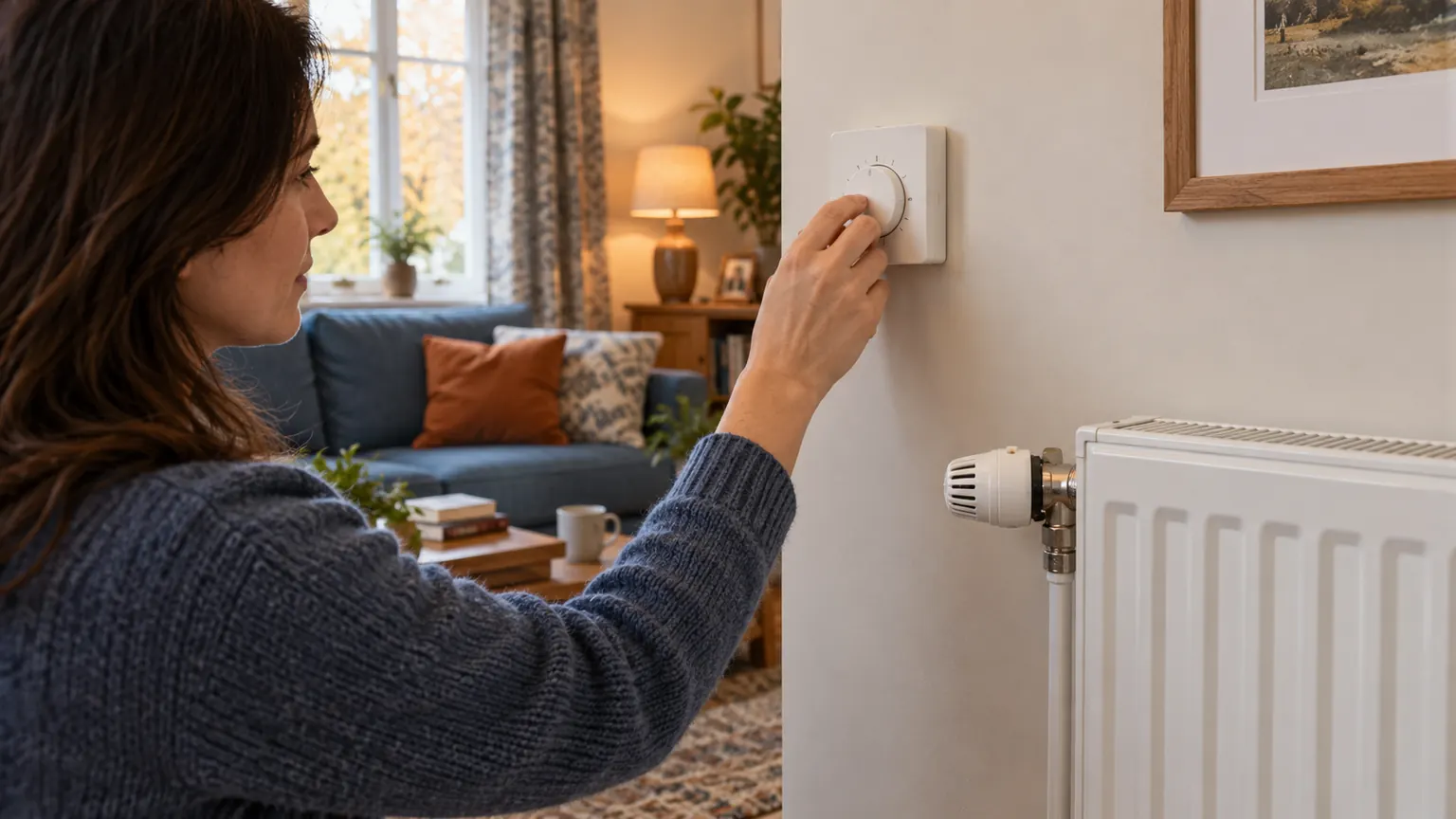
A room thermostat measures the air around it. It asks the heating to run until the target is reached, then stops the demand until the room cools. Turning it above the temperature you actually want does not make the home heat faster; on a cold day the system may simply need more time to reach the same target.
Energy Saving Trust says 18°C to 21°C is a typical range and estimates that reducing a thermostat from 22°C to 21°C could save £120 a year in Great Britain. That is an estimate for a particular change, not a guaranteed saving for every home. If the thermostat is already set sensibly, your saving may be smaller.
Keep the thermostat where air can circulate. Curtains, furniture, direct sunlight and a nearby radiator can make it sense a temperature that does not represent the room. Reduce the setting in small steps, leave enough time to judge comfort and reverse the change if anyone becomes cold.
Programme heat for when the home is occupied
Use the timer around the household’s real routine rather than leaving the heating continuously available out of habit. Energy Saving Trust suggests a typical programme might start about half an hour before you get up and finish about half an hour before bed. Your building may warm and cool faster or slower, so treat those times as a starting point.
Check the clock and day after a power cut and when the clocks change. A one-hour error can heat an empty home and leave it cold when people return. If plans change often, a simple temporary override can be more efficient than replacing the whole weekly schedule and forgetting to restore it.
A programmable thermostat can combine time and temperature targets. A lower setback temperature while the home is empty may suit some properties, but avoid copying a very low setting where someone is vulnerable to cold, where pipes could freeze or where damp and condensation are already a problem.
- Morning: start early enough to reach comfort, not automatically hours before waking.
- Daytime: reduce unnecessary heating when the home is empty, while protecting health and the building.
- Evening: schedule for the rooms and times actually used.
- Clock changes: confirm both the displayed time and every programmed period.
Use radiator valves room by room
A TRV senses the air around the valve and changes the flow of hot water through that radiator. Its numbers are not universal temperatures: a setting of 3 on one valve may not equal the same room temperature on another model. Start near the middle and find the lowest setting that keeps that room comfortable.
Living areas may need more heat than a spare bedroom. Turn little-used rooms down rather than assuming every radiator must match, but Energy Saving Trust advises against leaving rooms completely unheated for long periods in cold weather because some background heat can reduce condensation and mould risk.
Do not hide a TRV behind a radiator cover, curtain or furniture. Trapped warm air can make it close early while the room remains cold. A radiator without a TRV may be intentional, especially in the room containing the main thermostat, so ask a heating professional before adding or moving controls.
Measure the result in kWh and pounds
Record the gas meter or bill kWh before changing a control, then compare a similar period afterwards. Note outdoor temperature, days at home and unusual hot-water use. A colder week can use more gas even when the controls are better, so one short comparison is not proof.
Suppose a like-for-like month uses 150 kWh less gas. At Ofgem’s average capped Direct Debit gas rate of 7.97p/kWh for Great Britain from 1 October to 31 December 2026, the usage-cost difference is 150 × £0.0797 = £11.96. The standing charge does not change, and the rate on your own tariff may be different.
Use our gas bill calculator with your own dates and tariff, or follow the gas units to kWh guide if the meter records volume. If consumption rises unexpectedly, the high gas bill checklist helps separate weather and settings from estimated readings or billing problems.
| Figure | Calculation | Result |
|---|---|---|
| Measured difference | Like-for-like example | 150 kWh |
| Illustrative gas rate | Ofgem GB average, Oct–Dec 2026 | 7.97p/kWh |
| Usage-cost difference | 150 × £0.0797 | £11.96 |
| Standing charge | Same number of days | No change |
This values a measured reduction; it does not promise that a particular setting will save 150 kWh.
When an upgrade or professional check is worthwhile
Energy Saving Trust estimates that installing and using a programmer, room thermostat and TRVs effectively could save around £100 a year in Great Britain and £110 in Northern Ireland. The benefit depends on what controls already exist and how the home is currently heated. Smart controls can help people who value remote changes or flexible schedules, but an app alone does not guarantee lower bills.
Boiler flow temperature is a separate efficiency setting from the room thermostat. Our boiler flow temperature guide explains why a combi boiler and a system with a hot-water cylinder need different treatment. Do not change a cylinder thermostat or sealed boiler setting using general room-control advice.
Controls cannot fix a faulty appliance, stuck valve or badly balanced system. HSE strongly advises that gas appliances, flues and pipework are maintained and serviced at least annually by a Gas Safe registered engineer. Never remove the boiler case or attempt gas work. If rooms stay cold despite sensible settings, ask a competent heating engineer to diagnose the system rather than compensating with every control at maximum.
Frequently asked questions
What temperature should I set my central heating thermostat?
Energy Saving Trust describes 18°C to 21°C as the usual range for most people. Use the lowest setting that remains comfortable and safe, and remember that older people, babies and people with some health conditions may need more warmth.
Does turning the thermostat up heat the home faster?
No. The thermostat sets the target air temperature; a higher target does not make the heating system warm the building faster. In colder weather, start the programme a little earlier if needed.
What number should radiator valves be set to?
TRV numbers are not universal temperatures. Start near the middle, then lower or raise each valve gradually until that room reaches the lowest comfortable temperature.
Should I leave the heating on all day?
A timer normally helps match heating to occupancy, avoiding unnecessary heat when nobody is home. The best schedule depends on the building and household, and vulnerable people may need steadier temperatures.
Will smart heating controls definitely save money?
No. Savings depend on how well the existing system is controlled and whether smart features change actual heating behaviour. Remote access can be useful, but it does not make every home more efficient by itself.
Sources
Rates and rules checked on 6 October 2026. Time-sensitive figures should be checked again before use.