
At a glance
The short answer: thaw only an accessible outside pipe
A condensing boiler makes a small amount of waste water and sends it to a drain through a condensate pipe. If an external section freezes, the blockage can make the boiler shut down, leaving no heating or hot water. Freezing is only one possible cause of a boiler fault, so check the exact manual and fault code before assuming that ice is responsible.
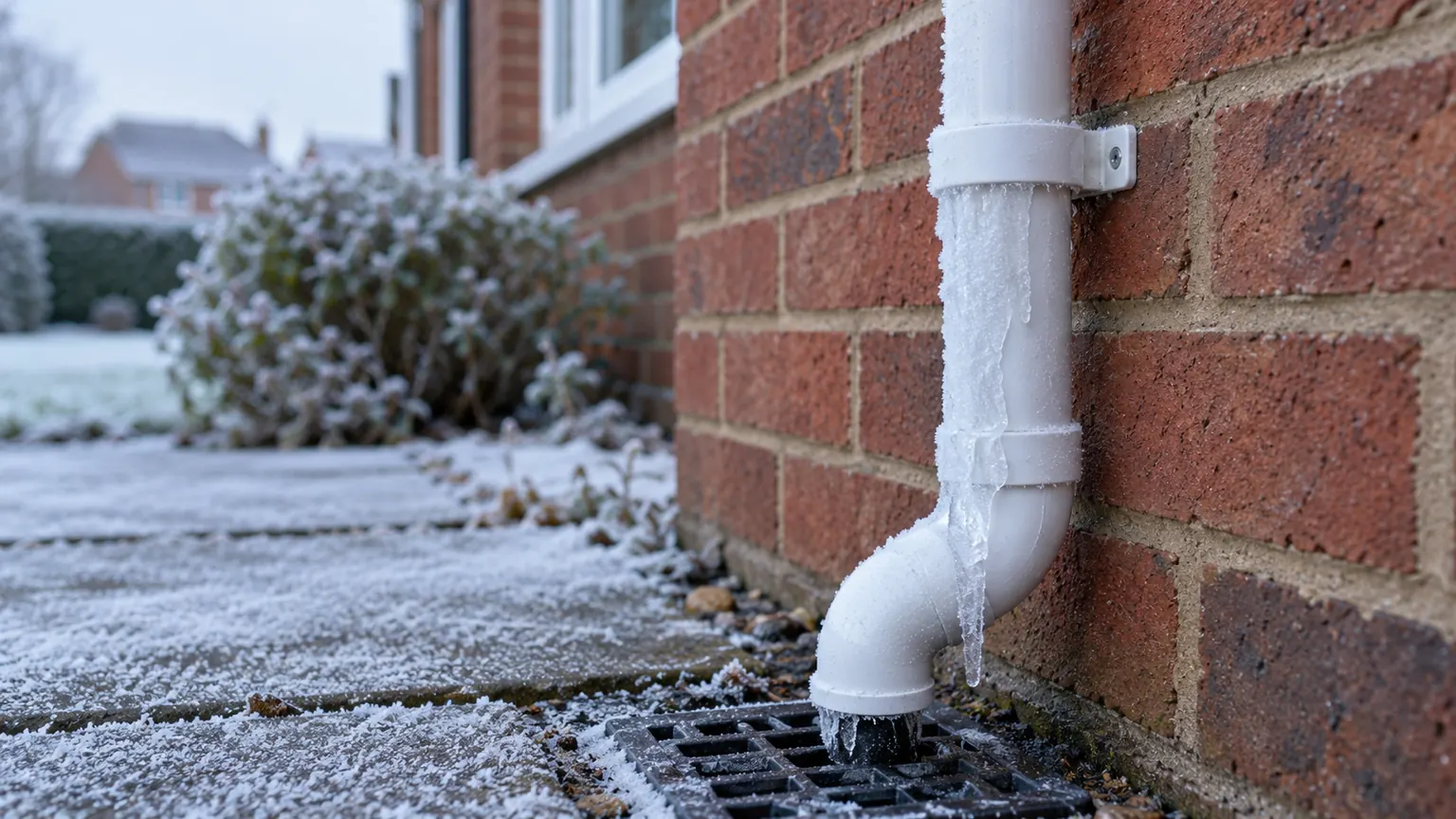
If the weather is below freezing and the plastic pipe is clearly identifiable, outside, at ground level and easy to reach, manufacturer guidance says you can warm the frozen section gradually with warm water—not boiling water—or a hot-water bottle or heat pad. Take care on icy ground, then reset the boiler only as its manual directs.
Do not climb, remove the boiler casing, dismantle pipework or use a flame. If the pipe is high, hidden, damaged or uncertain, or the boiler does not restart, contact the manufacturer, landlord or a suitably competent Gas Safe registered engineer.
Check whether a frozen condensate pipe is plausible
Start with the circumstances rather than the fault code alone. A freeze is plausible when the outdoor temperature has been below zero, part of the condensate route is outside or in an unheated space, and the boiler has locked out or stopped providing heat and hot water. Some boilers may gurgle because condensate cannot drain normally.
The condensate pipe is normally plastic and runs from beneath the boiler towards a household drain, soil stack or outside gully. It may be white, grey or another colour. Follow only visible pipework without touching other pipes, controls or the boiler casing. If you cannot identify it confidently, stop there.
Fault codes vary by make and model and can have more than one cause. Worcester Bosch, for example, mentions an EA code in its frozen-condensate advice, while other manufacturers use different codes. Use the manual for the exact appliance or ask the manufacturer; do not treat an online code for another boiler as a diagnosis.
- Weather: has there been a sustained frost or sub-zero spell?
- Route: is there a visible external plastic drain pipe connected to the boiler?
- Symptoms: has the boiler locked out, stopped heating or begun gurgling?
- Manual: does the model-specific guidance mention condensate blockage for this fault?
- Access: can you reach the suspected section from level ground without stretching?
How to thaw a condensate pipe safely
First read the boiler manual and make the area safe. Wear suitable footwear, keep children and pets away, and remember that spilled water can refreeze into a slip hazard. If the pipe is not accessible from ground level, do not use a chair or ladder in icy conditions; arrange professional help.
Apply a hot-water bottle or reusable heat pad to the suspected frozen section, or slowly pour warm water along it using a suitable container. Work gradually and repeat if needed. Do not use boiling water: rapid heat can damage plastic and creates a scalding risk. Never use a naked flame, blowtorch or other intense heat.
When the ice has cleared, inspect the visible pipe for a split, movement or leakage. Follow the exact manual to reset or restart the boiler—do not repeatedly press controls in the hope that it fires. A successful restart should restore normal heating and hot water without a recurring code or unusual leak.
| Step | Do | Stop when |
|---|---|---|
| 1. Confirm | Check freezing weather, visible pipe and manual | The pipe or fault is uncertain |
| 2. Access | Stay on level ground with clear footing | Height, ice or obstacles make access unsafe |
| 3. Warm | Use warm water or a hot-water bottle gradually | The pipe looks split, loose or damaged |
| 4. Restart | Follow the exact boiler manual once | The fault returns or the boiler stays off |
This is a user-level check for visible, accessible external pipework—not permission to dismantle the boiler or alter its drainage.
Avoid fixes that add risk or hide the real fault
Do not use boiling water, a flame or a blowtorch. Do not strike, squeeze, disconnect or cut the pipe, and do not pour chemicals into it. The pipe carries condensate to a drain; changing its route, fall, diameter or termination is installation work for a competent professional who can follow the boiler manufacturer’s instructions.
Do not open the boiler casing. HSE says work on a domestic gas appliance must be done by a Gas Safe registered engineer who is competent for that appliance type. A condensate blockage is on the drainage side, but an unexplained lockout can have a different cause and should not lead to DIY gas work.
A gas smell or a carbon-monoxide alarm is not a condensate-pipe troubleshooting job. Leave the appliance alone and follow the gas emergency steps. For a persistent pressure warning rather than a freeze, use the separate boiler-pressure guide.
Know when to stop and call an engineer
Get help if the suspected blockage is above ground-floor reach, the pipe is concealed, you cannot identify it, or the visible pipe is cracked or leaking. Also stop if safe gradual warming does not clear the fault, the boiler will not restart exactly as the manual describes, or the fault returns soon afterwards.
If you rent, report the loss of heating and hot water promptly to the landlord or managing agent and keep a photo of the display and fault code. Follow their repair process rather than modifying pipework. Tell them if anyone in the home is especially vulnerable to cold so the loss of heat can be prioritised appropriately.
For an engineer, record the outside temperature, fault code, any gurgling, where the external pipe runs and what safe thawing you tried. Check that a gas engineer is on the Gas Safe Register and that their ID card covers boilers. A clear history helps them assess the fault without pretending that the ice is the only possible cause.
Prevent the condensate pipe freezing again
Repeated freezing deserves an installation review, not a cycle of emergency thawing. HHIC guidance says an internal condensate connection is preferred where practicable. Where an external run is unavoidable, its route, size, fall, insulation, joints and termination all matter and must follow the appliance manufacturer’s instructions and relevant installation guidance.
Ask a competent heating engineer to inspect the whole route and recommend a durable remedy. That may involve rerouting to an internal drain, correcting the external installation or fitting a manufacturer-approved protection measure. Do not assume that wrapping any spare insulation around the pipe is enough; gaps, unsuitable materials and poor drainage can leave the underlying risk.
Before a forecast cold spell, make sure the boiler has been maintained, find the correct manual and learn which visible pipe is the condensate discharge. Test the heating before it is urgently needed. Our boiler-service guide explains what routine servicing should cover, but servicing does not replace repair of a known drainage problem.
Check gas use separately after heat is restored
Thawing the pipe restores drainage; it does not prove a particular saving or explain a high bill. A cold home may use more gas while reheating, and outside temperature, heating schedules and hot-water demand all affect consumption. Keep the repair question separate from the billing question.
Take a gas meter reading once the system is running normally and another after a representative period. Enter both readings, the dates and the exact tariff rates in the gas bill calculator. If usage still looks unexpected, work through the high gas bill checklist before attributing the change to the condensate fault.
Avoid repeatedly resetting a boiler that locks out. A recurring shutdown is useful fault evidence and needs diagnosis; operating it normally after one confirmed thaw is different from overriding a fault that has not been resolved.
Frequently asked questions
How do I know if my boiler condensate pipe is frozen?
A freeze is plausible when the weather is below zero, the boiler has stopped or locked out, and it has an external condensate pipe; gurgling or a model-specific fault code may add evidence. These signs are not a diagnosis, so check the exact manual.
Can I pour boiling water on a frozen condensate pipe?
No. Use warm water gradually, or a hot-water bottle or heat pad, only on an easy-to-reach ground-level pipe. Boiling water can damage plastic and can scald you.
Should I use a hairdryer to thaw a condensate pipe?
Warm water or a hot-water bottle avoids bringing a mains appliance near water and icy ground. Never use a naked flame or intense heat, and stop if access is unsafe.
Why does a frozen condensate pipe stop the boiler?
A condensing boiler must drain the water produced during normal operation. Ice can block that route, so the boiler may shut down rather than continue with condensate unable to escape.
Who should fix a condensate pipe that keeps freezing?
Ask a suitably competent heating engineer to inspect it. Installation changes should follow the boiler manufacturer’s instructions; a Gas Safe registered engineer is required for work on the gas appliance itself.
Sources
Rates and rules checked on 20 October 2026. Time-sensitive figures should be checked again before use.