
At a glance
The short answer: record the reading close to the change date
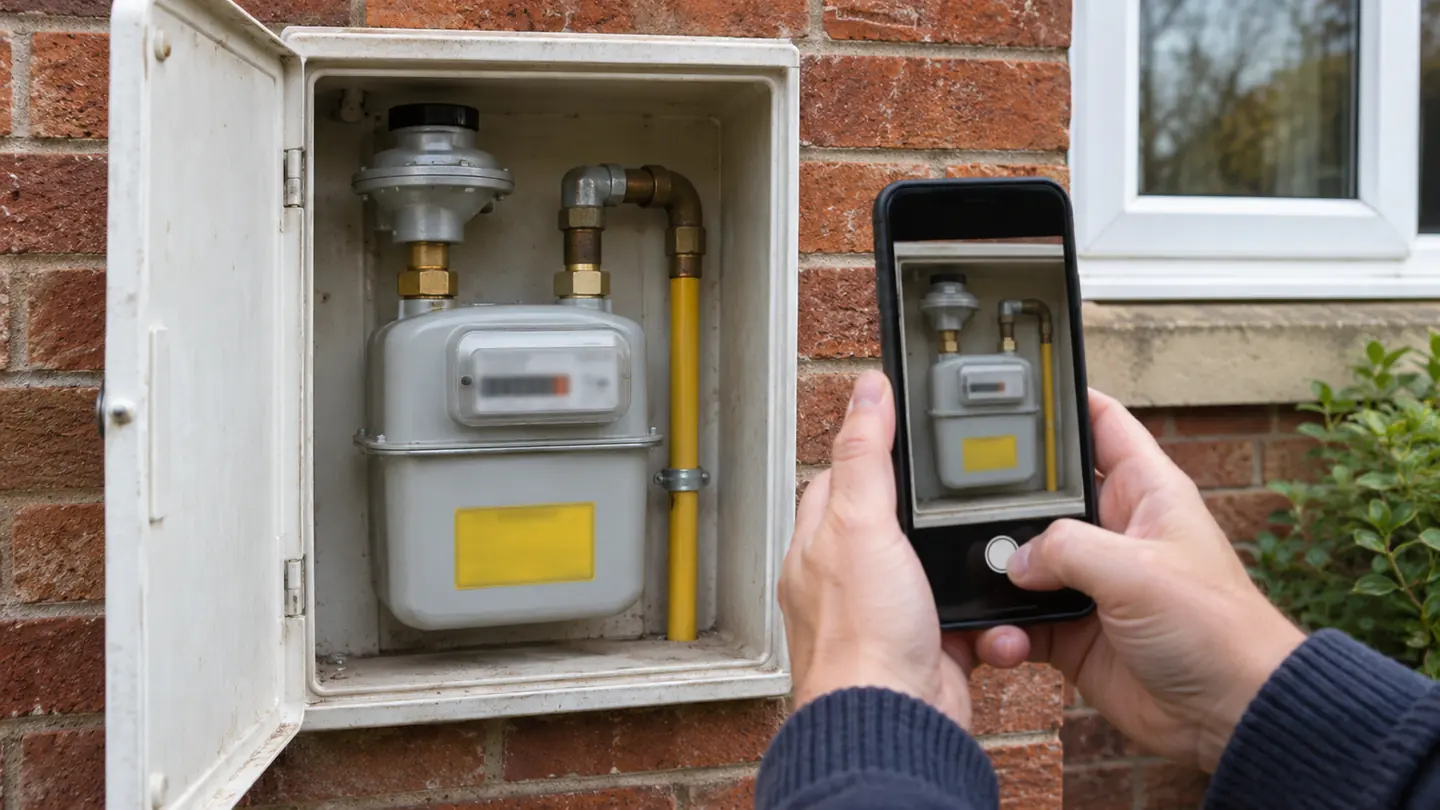
If your gas unit rate is changing, take a meter reading as close as practical to the date the new rate starts. Record the date and time, photograph the meter if it is safe to do so, and submit the reading through the method your supplier accepts. The reading creates a useful boundary: gas used before it should be charged at the old unit rate, while later use should be charged at the new rate.
You do not normally need an extra manual reading if a working smart meter is sending readings automatically. Even then, check the next statement for an actual reading around the change date and make sure the bill does not mark the relevant reading as estimated. A smart in-home display and the meter itself are different devices; a blank or disconnected display does not automatically mean the meter has stopped sending readings.
Submission windows differ by supplier. Follow its notice, enter the real date and never alter a reading or backdate it to secure an earlier price.
When a price-change meter reading is useful
A boundary reading matters when the unit rate on your gas tariff changes. That can happen when a standard variable tariff changes, when a fixed deal ends, when you move to a different tariff, or when a supplier applies a separately notified price change. Ofgem sets the energy price cap every three months for default tariffs in England, Scotland and Wales, but the cap is not the price of every tariff and it does not apply in Northern Ireland.
If you are on a fixed tariff and its rates are not changing, a price-cap date does not by itself change what you pay. If your fixed deal ends on that date, however, a reading can separate the final fixed-rate usage from the new tariff. Check the contract and supplier notice rather than assuming a national headline applies to your account.
The reading divides usage charged in kilowatt hours. Standing charges are daily, so the old and new daily rates should also be assigned to the correct dates; the meter does not measure those days.
- Standard variable tariff: check whether the supplier is changing your unit rate or standing charge.
- Fixed deal ending: record the final reading before the account moves to a new tariff.
- Switching supplier: keep the opening or closing reading and confirmation from both accounts.
- Northern Ireland: follow the gas supplier’s tariff notice; Ofgem’s Great Britain price cap does not apply.
Take and submit the gas reading without common mistakes
First identify the meter type. A metric meter is marked m³ and usually has five whole-number digits before a decimal point or red digits. An imperial meter is marked ft³ and often has four whole-number digits. Read from left to right, include leading zeroes, and ignore red digits and digits after the decimal point when giving the normal meter index to your supplier. The gas meter reading guide shows the common displays.
Photograph the full meter face so the reading and serial number can be matched. Do not move covers, touch pipework or force a stiff meter-box door. Note the date and time, submit through the supplier’s stated channel and save the confirmation.
If a genuine reading is rejected, do not guess another number. Give the supplier the previous bill reading, current reading, photograph and serial number. Ask it to check for a typing error, wrong meter record or unrecorded meter exchange.
Worked example: split gas use between the old and new rate
Suppose a metric gas meter read 12,500 at the start of the bill, 12,540 when the tariff changed and 12,565 at the end. That assigns 40 m³ to the old-rate period and 25 m³ to the new-rate period. Using an illustrative calorific value of 39.2 MJ/m³ and the standard volume correction factor of 1.02264 gives about 11.14 kWh per cubic metre for this example.
The old period is therefore about 445.42 kWh. At an illustrative 7p per kWh, it costs £31.18. The new period is about 278.39 kWh; at an illustrative 8p per kWh, it costs £22.27. The usage charge is about £53.45 before adding the applicable standing charges and any VAT treatment shown by the tariff.
These rates are examples, not current offers or price-cap figures. Your supplier uses the calorific value shown on the bill and may retain more precision before rounding. Use the gas units to kWh guide to check the conversion, then enter your own readings and tariff in the gas bill calculator for a separate estimate.
| Period | Meter units | Approximate energy | Illustrative usage cost |
|---|---|---|---|
| Old rate | 40 m³ | 445.42 kWh | £31.18 at 7p/kWh |
| New rate | 25 m³ | 278.39 kWh | £22.27 at 8p/kWh |
| Total | 65 m³ | 723.80 kWh | £53.45 before standing charges |
Example uses 1.02264 × 39.2 ÷ 3.6. Your bill may use a different published calorific value.
Check the first bill after prices change
Confirm the opening, boundary and closing readings. The split may appear as two charge lines rather than one prominent boundary reading. Check the dates, kWh, unit rate and standing charge for each period. An E commonly means estimated, but labels vary.
Without an accepted boundary reading, the supplier may estimate how much use fell on each side. That matters in winter because gas use is rarely even each day. Send your dated evidence and ask for an explanation or correction if the split looks unreasonable.
Check the whole corrected statement, not only the balance. The estimated gas bill guide explains how to compare the meter index, dates, tariff and account balance. Keep both versions.
What to do if a smart reading is missing or the split is disputed
A smart meter outside smart mode should still record gas use and allow a manual reading. Ofgem says a connection can be lost after switching supplier or if the meter was installed without connection to the national communications system. Ask the supplier to investigate.
If evidence is ignored, complain formally and request a recalculation of both rate periods. Include the photograph, submission confirmation, tariff notice and bills. In Great Britain, an unresolved complaint can normally go to the Energy Ombudsman after eight weeks or sooner with a deadlock letter.
Northern Ireland has a separate route: start with the gas supplier, then seek help from the Consumer Council. Continue paying any undisputed amount and tell the supplier if a correction would create an unaffordable balance.
Frequently asked questions
Do I need a gas meter reading every time the price cap changes?
Only if your tariff rates are changing and the supplier does not already have a reliable smart reading. A working smart meter should send readings automatically, but check the next bill for an actual reading and the correct split.
Can I submit the reading a day late?
Supplier rules differ. Many can accept a genuine reading taken close to the change date, but you should use the actual date and follow the submission window in the supplier’s notice. Do not backdate a reading.
Should I use the smart meter or the in-home display?
Use the reading shown on the meter itself when a manual reading is requested. The in-home display is a separate device and its cost or usage display can lag or use outdated tariff information.
What if the supplier estimates use across the price change?
Compare the estimate with your dated meter photograph and submission confirmation. Ask the supplier to explain the allocation and recalculate it using the accepted reading if the split is wrong.
Does the Ofgem price cap apply in Northern Ireland?
No. Ofgem’s domestic price cap covers default tariffs in England, Scotland and Wales. Northern Ireland has a separate regulator and market, so follow the tariff-change notice from your Northern Ireland gas supplier.
Sources
Rates and rules checked on 16 November 2026. Time-sensitive figures should be checked again before use.