
At a glance
The short answer: responsibility changes at the meter
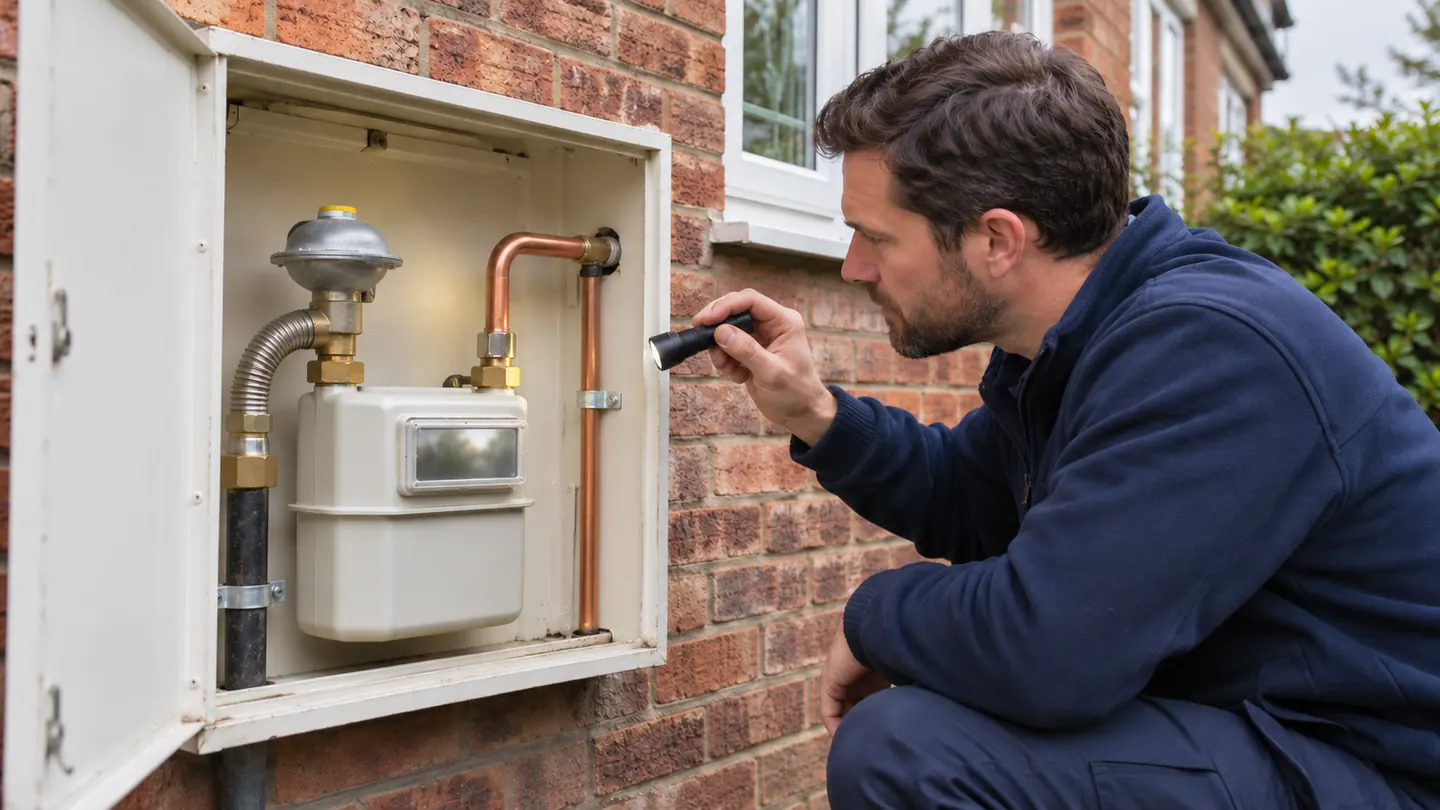
For a typical mains-gas home in Great Britain, the gas network operator is responsible for the distribution main in the street and the service pipe that brings gas to the property. Energy Networks Association guidance places the network boundary at the emergency control valve beside the meter. The meter installation is managed separately and meter work must normally be arranged through the gas supplier you pay.
The pipe leaving the meter and running to the boiler, cooker, fire or other appliance is installation pipework. In an owner-occupied home, the owner is normally responsible for keeping that pipework and the appliances safe. In rented accommodation, the landlord has legal duties for pipework and appliances it provides for tenants.
These boundaries tell you who should organise routine work. They are not a reason to investigate a suspected leak yourself. If you smell gas or damage a pipe in Great Britain, call the National Gas Emergency Service on 0800 111 999. In Northern Ireland, call 0800 002 001.
Follow the gas from the street to the appliance
Several organisations can be involved at one meter position. Start with the part of the installation that appears to be affected.
| Part of the supply | Usually responsible | Who the householder contacts |
|---|---|---|
| Street main and service pipe to the control valve | Gas network operator or transporter | The network operator; use the emergency number for a leak or damaged pipe |
| Emergency control valve | Gas network operator at the end of its service | Network operator or emergency service |
| Gas meter and meter installation | Meter asset arrangements through the gas supplier | The gas supplier shown on the bill |
| Outlet pipe from meter to appliances | Property owner or landlord | A suitably qualified Gas Safe registered engineer |
| Boiler, cooker, fire and their flues | Property owner or landlord | A Gas Safe registered engineer qualified for that appliance |
Unusual shared supplies, independent gas transporters and private or LPG systems can have different ownership documents. Confirm the boundary before commissioning work.
Problems before the meter belong with the gas network
The service pipe branches from the distribution main and carries gas towards the meter. HSE guidance distinguishes it from installation pipework downstream of the emergency control valve. A heating engineer cannot simply alter the service: Energy Networks Association guidance says this work belongs with a gas distribution network company or an appropriately accredited infrastructure provider.
Contact the network operator if you suspect the incoming service pipe is unsafe, need the supply route changed, have low pressure affecting the whole property, or plan excavation near a gas service. You can find the Great Britain gas transporter through Find My Supplier. Do not assume the name on the bill is the network operator; the supplier sells and bills for gas, while the transporter operates the pipes.
If a builder or householder strikes a gas pipe, stop work, keep people away and use the emergency number immediately, even when no gas can be smelled. Do not try to clamp, cover or reconnect the pipe.
Meter faults and exchanges start with the supplier
The meter sits between the network service and the property’s installation pipework. The Energy Networks Association says its installation or modification must be arranged through a supplier, so the householder should start with the company shown on the bill.
Call the supplier if the meter display has failed, readings appear inaccurate, a smart meter is not communicating, a seal looks damaged, or the meter needs exchanging. Use the supplier and MPRN guide if you do not know which company supplies the address. For a billing mismatch, compare the serial and supply-point details using the wrong-meter checklist.
A meter box is not necessarily part of the meter asset. It commonly belongs to the property owner. Ask the supplier or network operator before arranging a repair because the exact box type and damaged part matter. Never block access to the emergency control valve.
The owner is responsible for pipework after the meter
The outlet pipe from the meter feeds the appliances inside the property. HSE describes all pipework from the meter to the appliance as installation pipework. In an owner-occupied home, the owner should arrange inspection and repair by a Gas Safe registered engineer whose registration covers the work involved.
Do not alter a gas pipe yourself. Use the Gas Safe Register to confirm that the engineer is qualified for the relevant type of work. A move for building work may require both the network operator on the inlet side and a Gas Safe engineer on the outlet side. The gas-meter moving guide explains that sequence.
The network may repair a fault in its own service, while the owner normally pays for requested alterations and repairs to private installation pipework. Get a written scope that says which side of the meter is included.
Landlords and tenants have different duties
In rented homes, HSE says the landlord must maintain in a safe condition the gas pipework, appliances and flues it provides for tenants. Installation pipework from the meter to appliances should be included in the maintenance arrangements. The landlord must also arrange the required annual gas safety check for the appliances and flues it provides.
A tenant should report damage, unusual smells, loss of supply or suspected faults promptly. A tenancy agreement cannot transfer the landlord’s statutory gas-safety duties to the tenant. A tenant is responsible for maintaining an appliance they own, while the landlord can still have duties for associated pipework.
For routine concerns, write down where the affected pipe or appliance is and tell the landlord or managing agent. For a suspected gas escape, call the emergency service first rather than waiting for a landlord response.
Worked example: a leak beside a boiler is not a meter fault
Suppose an engineer finds a leak on a copper joint two metres after the meter, close to the boiler. The pipe is downstream installation pipework, so the owner or landlord should arrange repair by a suitably qualified Gas Safe registered engineer. The gas supplier does not become responsible merely because the same pipe carries gas measured by its meter.
Now suppose the incoming service pipe is damaged during excavation outside. That is a network-side emergency. The correct first action is to stop work, move away and call the gas emergency number. The emergency team will make the situation safe and identify the operator responsible for the network asset.
Once any safety issue is resolved, take two dated readings and use the gas bill calculator if you want to check usage across the repair period. A pipework responsibility decision and a billing calculation are separate questions.
Northern Ireland has separate operators and emergency contacts
Great Britain’s Ofgem arrangements do not apply in Northern Ireland. Supplier terms use the same broad dividing idea: the network operator maintains its side of the meter, while the customer or property owner is responsible for equipment on the property side unless an agreement says otherwise.
The available network and supplier depend on the Northern Ireland distribution area. Contact the supplier shown on the bill for meter or account questions and the relevant network operator for planned network work. If you smell gas, suspect an escape or damage a gas pipe, nidirect says to call the Northern Ireland Gas Emergency Service on 0800 002 001.
Use a Gas Safe registered engineer for household installation pipework or appliances, and confirm responsibility from the tenancy and supply documents when the setup is unusual.
Frequently asked questions
Is the gas pipe from the street to my meter my responsibility?
For a typical mains-gas home, the gas network operator is responsible for the distribution main and service pipe up to the emergency control valve. Confirm the operator through Find My Supplier because independent network arrangements can exist.
Who is responsible for a gas pipe after the meter?
The property owner or landlord is normally responsible for installation pipework from the meter outlet to household appliances. Gas work must be completed by a suitably qualified Gas Safe registered engineer.
Who fixes a faulty gas meter?
Contact the gas supplier shown on your bill. The supplier arranges work with the meter asset provider. Do not remove seals or try to repair the meter yourself.
Is a landlord responsible for gas pipes?
A landlord must maintain gas pipework, appliances and flues it provides for tenants in a safe condition and arrange the required safety checks. A tenant-owned appliance is different, although the landlord can still have duties for associated pipework.
Who should I call if I smell gas?
In Great Britain call the National Gas Emergency Service on 0800 111 999. In Northern Ireland call 0800 002 001. Do not wait to establish ownership before reporting a suspected escape.
Sources
Rates and rules checked on 23 November 2026. Time-sensitive figures should be checked again before use.
- Energy Networks Association: gas service, meter and consumer responsibility boundaries
- HSE: maintenance responsibility for gas installation pipework
- HSE: domestic gas responsibilities for landlords and tenants
- National Gas: Great Britain emergency contacts and pipe-strike advice
- firmus energy: Northern Ireland network-side meter responsibility and emergencies
- nidirect: Northern Ireland Gas Emergency Service