
At a glance
The short answer: ask the supplier for credit and an affordable plan
A gas prepayment meter lets you buy energy before using it. If the balance is about to run out and you cannot top up, contact your gas supplier straight away. Ofgem says suppliers must offer help, which can include extra credit while they assess your situation and agree a way for you to repay it.
Emergency credit, friendly-hours credit and additional support credit are not free money: they normally have to be repaid. The important point is that your supplier must consider what you can afford. Tell them if illness, disability, pregnancy, young children, age, communication needs or financial difficulty make losing heat especially risky.
Do not tamper with the meter or gas fittings. Follow the meter and supplier instructions for restoring supply after a top-up. If you smell gas or suspect carbon monoxide, leave the credit problem aside, open doors and windows, avoid flames and electrical switches, and call the National Gas Emergency Service on 0800 111 999.
What to do when your gas meter is low or off supply
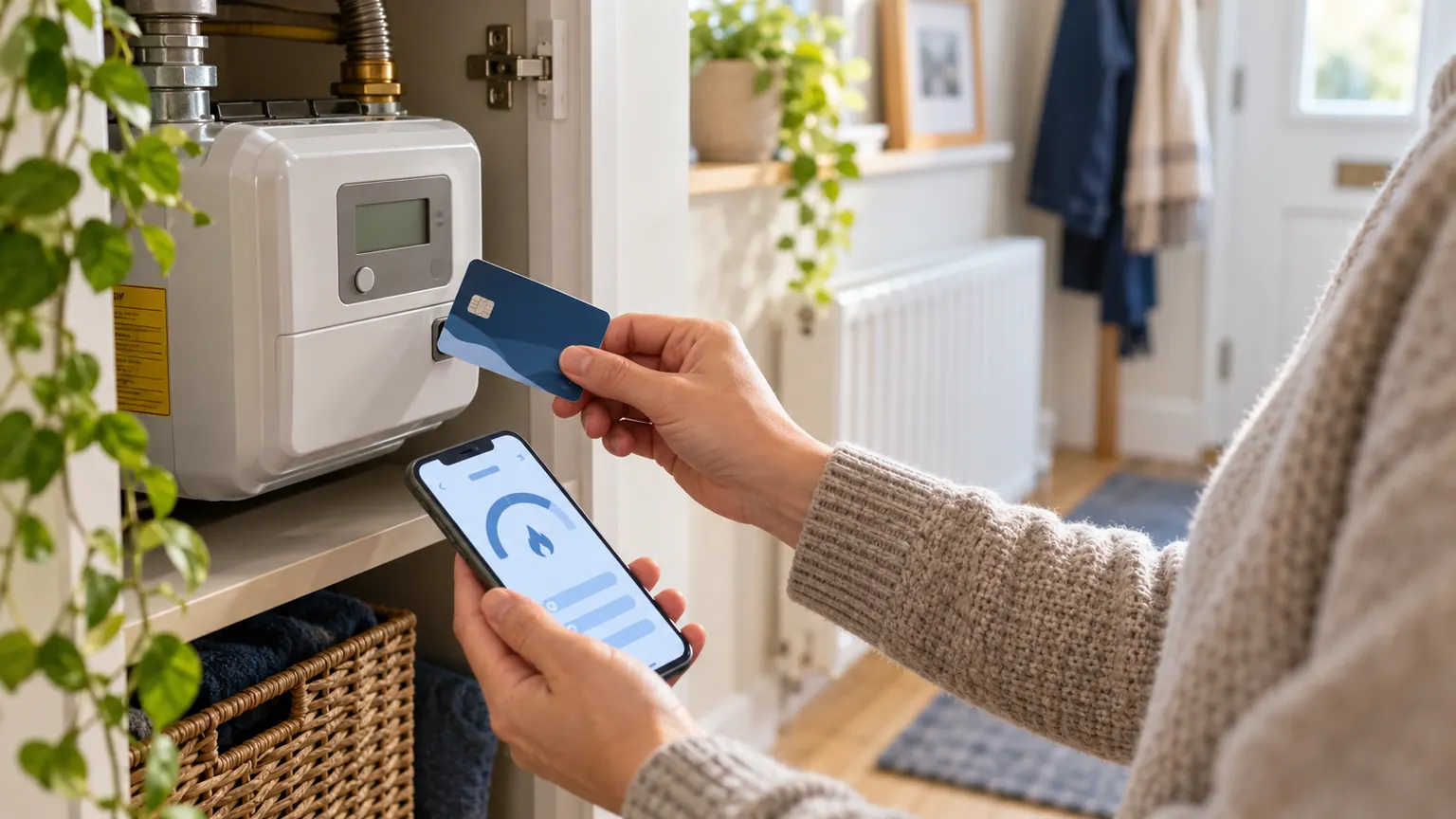
Check the balance on the meter, in-home display or supplier app, then try the normal top-up route. Keep the receipt or confirmation code. If a card, key, app or payment has failed, tell the supplier exactly what happened; a payment can succeed without reaching the meter immediately, so paying twice is not always the right fix.
Look for an emergency-credit option on the meter or display, but do not assume every model activates it in the same way. Supplier instructions should explain the buttons or menu for your meter. Some arrangements also protect supply during specified nights, weekends or bank holidays, often called friendly-hours credit. Availability and activation vary, so check rather than relying on it.
If the meter has already stopped the gas, top up or ask the supplier for help, then use only the approved reconnection steps for that meter. Gas appliances may need to be off before supply is restored. If the display shows an error, the meter will not reconnect, or you are unsure, call the supplier instead of repeatedly pressing controls or attempting a repair.
- Have ready: account number, address, meter balance and any error code.
- Explain urgency: say whether the home has no heating or hot water and who is affected.
- Keep evidence: save top-up receipts, screenshots and the time of each call.
- Use official contacts: use the number on a bill, supplier app or supplier website.
Emergency, friendly-hours and additional support credit are different
The names sound similar but serve different situations. Emergency credit is a limited temporary balance when normal credit is low or exhausted. Friendly-hours credit can delay disconnection during protected periods. Additional support credit is for a customer in a vulnerable situation who has self-disconnected or is at risk of doing so.
Ofgem’s November 2025 expectations say additional support credit should be assessed case by case, fairly and proportionately. It is intended as emergency support rather than a long-term answer to an unaffordable tariff or debt. The supplier should also consider other support and align repayment terms with the customer’s ability to pay.
Ask the supplier to state which type of credit it is adding, how much, when repayment begins and how each future top-up will be split. If the proposed recovery leaves too little for current gas use, say so and ask for a lower recovery amount or a different payment plan.
| Type | Purpose | What to check |
|---|---|---|
| Emergency credit | Short buffer after normal credit runs low | How to activate it and repay it |
| Friendly-hours credit | Avoids disconnection in certain protected periods | Times, meter type and supplier rules |
| Additional support credit | Support for vulnerable customers at risk of losing supply | Assessment and affordable repayment terms |
Amounts and activation methods vary. Confirm the current terms with your supplier.
Work out where a top-up has gone
A top-up does not always become the same amount of usable gas. Part can repay emergency credit, standing charges or an agreed debt-recovery amount. The daily standing charge can continue to build up even when no gas is being used, so the first top-up after a long break may leave less available than expected.
For example, suppose you add £20. If £4.50 repays used emergency credit and £3 is the agreed debt recovery, the usable balance is £20 − £4.50 − £3 = £12.50. Any outstanding standing charge could reduce it further. This is only an illustration; use the screens, annual statement or supplier breakdown for your meter.
If the deduction is unclear, ask for a written breakdown of current energy, standing charge, emergency or support credit, and historic debt. Compare the unit rate with your tariff. You can use our gas bill calculator to estimate current usage separately, and our gas-bill breakdown explains unit rates and standing charges.
Ask for debt recovery that leaves enough for current gas
If debt is being recovered through the meter, some money from each top-up may go to the old balance. Citizens Advice says to tell the supplier when the amount is unaffordable and ask it to reduce what is collected. Give a realistic picture of income, essential spending, health needs and how often you can top up.
Keep old debt separate from current use. A meter screen can show credit falling quickly because it is collecting both. Ask the supplier for the debt balance, recovery rate and transaction history. If the debt arose from an old catch-up bill, also check our gas back-billing guide; the 12-month protection has conditions and does not erase every old charge.
If you have moved into a home with a prepayment meter, contact the existing supplier before using the previous occupier’s card or key where possible. The supplier should remove debt that is not yours and issue the correct top-up method. Our moving-home gas checklist covers the evidence to keep.
Say when prepayment is unsafe or impractical for your household
A gas prepayment meter is not suitable for every home. Tell the supplier if anyone depends on continuous energy for health, cannot reach or operate the meter, cannot travel to a top-up point, or would face serious harm if the gas stopped. Ask to join the Priority Services Register where relevant and request a safer payment method or meter arrangement.
Ofgem says involuntary installation or a remote smart-meter switch to prepayment must be a last resort. Before doing it, a supplier must try to agree another repayment method, make at least 10 contact attempts using different methods and visit the home to assess circumstances. It must not proceed for specified highest-risk situations, including some severe health needs, a child under two, or a household where nobody can top up because of physical or mental health.
If you believe a supplier ignored the rules, ask for its suitability assessment and make a formal complaint. Escalation to the Energy Ombudsman may be available after the supplier’s process. Great Britain’s Ofgem rules do not govern Northern Ireland: Northern Ireland customers should contact their supplier and the Consumer Council for local help.
Make the next top-up easier to understand
After the immediate problem is resolved, photograph or note the balance before and after a top-up and check it again after 24 hours. Record the amount used for gas, standing charge and debt. A few dated observations are more useful than guessing from how quickly a round-number top-up disappeared.
If the meter is smart, keep the physical card or key if your supplier provides one, because it can be a backup when an app or internet connection fails. If a smart meter is not communicating properly, follow our smart gas meter troubleshooting guide. Ask about a credit-mode switch if prepayment no longer works safely or practically for your household.
Treat repeated emergency-credit use as a sign that the payment arrangement needs review, not as a personal failure. Ask about a lower debt recovery rate, supplier hardship support, fuel vouchers, benefits checks and independent debt advice. These steps can address both today’s supply and the reason the balance keeps reaching zero.
Frequently asked questions
How do I get emergency credit on a gas prepayment meter?
Check the instructions for your specific meter or supplier app, because activation varies. If you cannot activate it or cannot afford to top up, contact the supplier and explain that your gas is low or off supply.
Do I have to pay emergency gas credit back?
Usually yes. Emergency and additional support credit are repayable. Ask how much will be taken from future top-ups and request affordable terms if the proposed recovery leaves too little for current gas.
Why did my gas top-up disappear?
Part may have repaid emergency credit, standing charges or an agreed debt-recovery amount. Ask the supplier for a transaction breakdown if the meter or statement does not make each deduction clear.
Can a supplier force me onto a gas prepayment meter?
In Great Britain it can happen for debt only as a last resort and under strict Ofgem rules. Suppliers must assess safety and suitability, try other repayment arrangements and protect specified vulnerable households.
What if a gas prepayment meter is not safe for my household?
Tell the supplier exactly why losing supply or topping up creates risk and ask for another payment arrangement. Mention health, disability, age, pregnancy, young children, access or communication needs, and ask about the Priority Services Register.
Sources
Rates and rules checked on 7 October 2026. Time-sensitive figures should be checked again before use.