
At a glance
The short answer: the landlord arranges the check
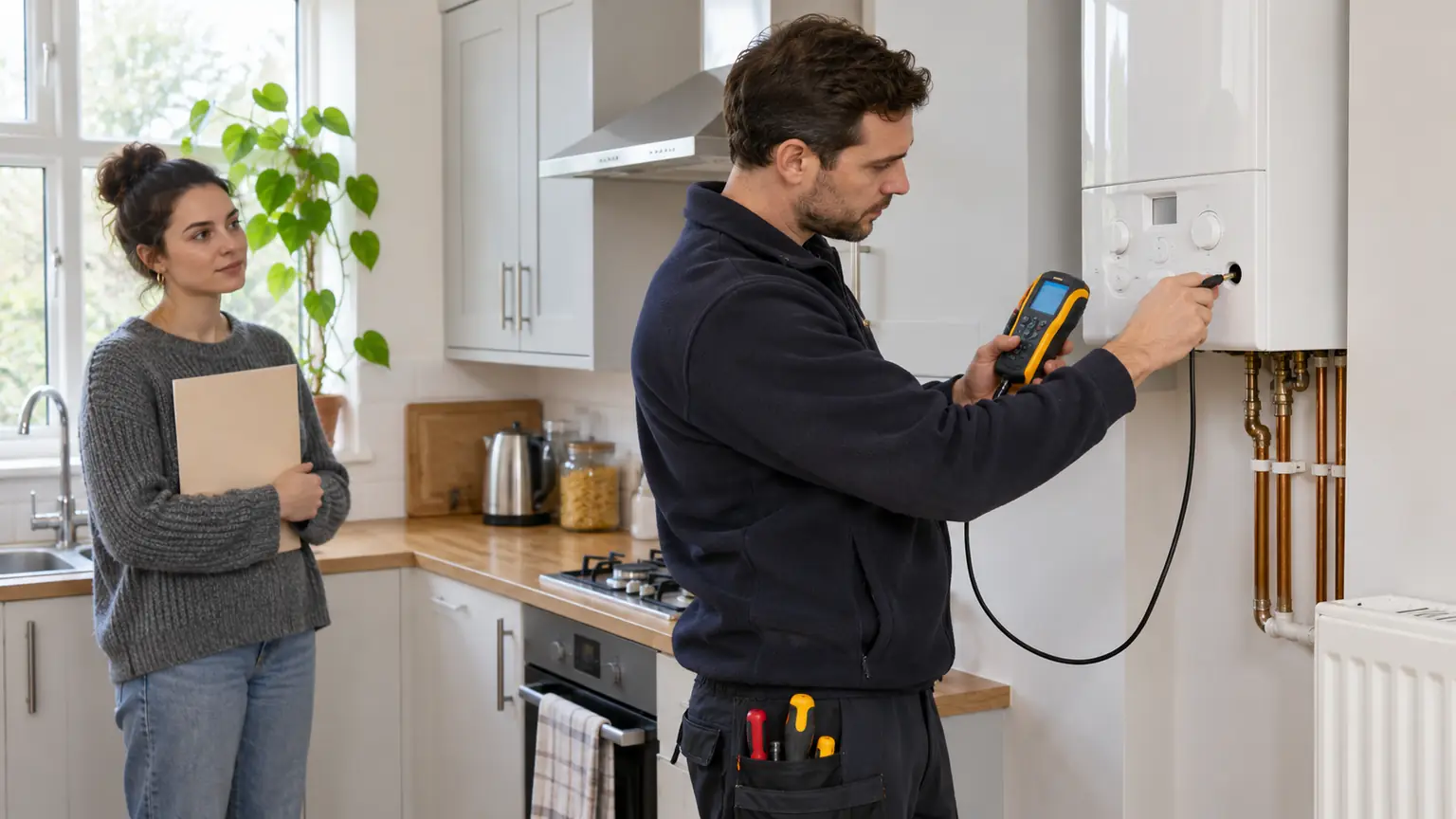
In Great Britain, landlords must arrange a gas safety check at least every 12 months for the gas appliances and flues they own and provide for tenants. The work must be done by a Gas Safe registered engineer who is qualified for the relevant appliance. A new tenant should receive the current gas safety record before moving in; an existing tenant should receive the new record within 28 days of the check.
The annual safety check and a boiler service are not interchangeable. A safety record confirms the prescribed checks and their results. Maintenance and servicing deal with condition, performance and repairs. A landlord remains responsible for keeping the pipework, appliances and flues they provide in a safe condition between annual checks.
Northern Ireland has its own Gas Safety (Installation and Use) Regulations. From 30 November 2026, amended rules introduce timing flexibility for annual landlord checks and clarify aspects of the record, so tenants and landlords there should use current HSENI guidance rather than assuming every Great Britain detail is identical.
What the landlord is responsible for
The duty covers gas appliances, fittings, flues and pipework the landlord owns and provides for the tenant’s use. Typical examples are a gas boiler, gas fire or supplied gas hob. HSE says communal gas appliances or flues that tenants can use may also fall within the arrangements that must be maintained and checked.
A tenant-owned appliance is different: the landlord is generally not responsible for the appliance itself, but remains responsible for associated installation pipework and flues within the landlord’s duties. Do not connect, disconnect or alter an appliance without the required permission and competent gas work.
A managing agent can arrange the work, but the management contract should make responsibility clear. The existence of an agent does not turn the annual check into the tenant’s job. A residential tenancy agreement cannot simply transfer the landlord’s statutory gas-safety duties to the tenant.
- Maintenance: keep supplied gas equipment, pipework and flues safe.
- Annual check: arrange the required safety checks within the legal cycle.
- Competence: use a registered engineer qualified for that category of work.
- Records: retain the check record and provide the tenant’s copy on time.
What a tenant should do before the visit
Respond to appointment requests and offer reasonable access. HSE says a landlord must take reasonable steps to complete the check but must not use force to enter. If the proposed time is impossible, suggest alternatives promptly and keep the correspondence.
Clear ordinary belongings away from the boiler, meter, fire or cooker so the engineer can reach the equipment. Do not remove fixed panels or attempt to expose gas components yourself. Tell the engineer or landlord about warning signs, repeated lockouts, staining, unusual smells, headaches or a carbon monoxide alarm activation.
Ask to see the engineer’s Gas Safe Register ID card and check the back for the categories of work they are qualified to carry out. Registration alone does not mean every engineer is qualified for every appliance or fuel type.
Read the gas safety record instead of just filing it
The record should identify the property, appliance or flue checked, the engineer and the results. It should record required safety information and any defect found. An electronic copy is acceptable when it can be reproduced, is protected from loss or interference and identifies the engineer.
Do not treat an expiry date as permission to ignore a fault until the next visit. If the record notes a defect, ask what follow-up action is required and when it will happen. HSE says the record should be issued when the check is completed rather than held back until remedial work is finished.
Keep the record with repair messages and photographs. The related boiler service guide explains how servicing differs from the legal safety check, while our carbon monoxide alarm guide covers alarm placement and testing across the UK.
| Point | Landlord gas safety check | Boiler service |
|---|---|---|
| Main purpose | Confirm prescribed gas-safety matters | Maintain and inspect the boiler |
| Tenant record | Formal gas safety record | Service report may be provided |
| Legal cycle | At least every 12 months for covered equipment | Maintenance schedule depends on duties and manufacturer guidance |
| Who carries it out | Gas Safe registered and appropriately qualified engineer | Gas Safe registered and appropriately qualified engineer |
One visit can include both jobs if they are separately completed and recorded, but one should not be assumed to replace the other.
What to do if the check or record is overdue
Write to the landlord or agent, ask for the current record and give a reasonable date for a response. State the property address and when you last received a record. Keep the message factual; the immediate goal is to get the check arranged and the evidence supplied.
In Great Britain, HSE provides a route for tenants to report that a landlord has not supplied a current gas safety record. Housing enforcement and tenancy remedies vary between England, Scotland and Wales, so use the relevant national or local housing advice if the problem continues. In Northern Ireland, use HSENI and nidirect guidance.
An overdue record does not prove that gas is leaking, but it should not be ignored. If you smell gas, do not wait for the landlord’s reply: follow the emergency steps in our gas-leak guide. Call 0800 111 999 in Great Britain or 0800 002 001 in Northern Ireland from a safe place.
If the engineer switches an appliance off
Do not reconnect or use an appliance that an engineer has identified as unsafe. Ask the landlord for the written finding, the repair plan and temporary arrangements if heating or hot water is unavailable. HSE says a landlord should provide emergency heating when a heating appliance has been disconnected while remedial work is arranged.
A carbon monoxide alarm sounding, symptoms such as headache or dizziness, soot staining or a gas smell require a safety response, not a bill calculation. Leave the affected area and follow the alarm or emergency-service instructions. Do not use a calculator result to decide whether an appliance is safe.
Once the system is safe and operating normally, two dated meter readings can help separate a repair from a change in gas use. Use the gas bill calculator to estimate the cost over that measured period, but keep the maintenance and billing questions separate.
Northern Ireland’s rules change on 30 November 2026
HSENI says the Gas Safety (Installation and Use) (Amendment) Regulations (Northern Ireland) 2026 come into operation on 30 November 2026. They add flexibility to the timing of landlords’ annual gas safety checks, clarify that only gas-safety defects should be recorded and determine the next due date under the amended rules.
That change does not remove the annual safety duty. It is designed to let a check be completed within the permitted window without steadily losing time from the existing cycle. Landlords and tenants should keep the previous record so the next due date can be checked against the transitional and amended rules.
This guide gives a practical UK overview, not legal advice for a particular tenancy. Use the official source for the nation where the property is located, especially when deciding how to report non-compliance or pursue a housing remedy.
Frequently asked questions
How often does a landlord need a gas safety check?
Covered gas appliances and flues must be checked at least every 12 months. Timing flexibility can preserve the existing due date when a check is done within the permitted window.
When should a tenant receive the gas safety record?
In Great Britain, a new tenant should receive it before moving in and an existing tenant within 28 days of the completed check. Northern Ireland has separate regulations and updated rules from 30 November 2026.
Is a boiler service the same as a landlord gas safety check?
No. The safety check records prescribed safety matters; servicing concerns maintenance and condition. Both can happen during one visit only if each job is properly completed.
Can a tenant refuse access for a gas safety check?
A landlord should arrange reasonable access and cannot use force. A tenant should respond and offer workable appointments because the check protects occupants and is a legal duty.
Who pays for the landlord gas safety check?
The landlord is responsible for arranging the statutory check for appliances and flues they provide. It should not be presented as a repair the tenant must organise.
Sources
Rates and rules checked on 3 November 2026. Time-sensitive figures should be checked again before use.