
At a glance
The short answer: treat an unexpected yellow flame as a warning
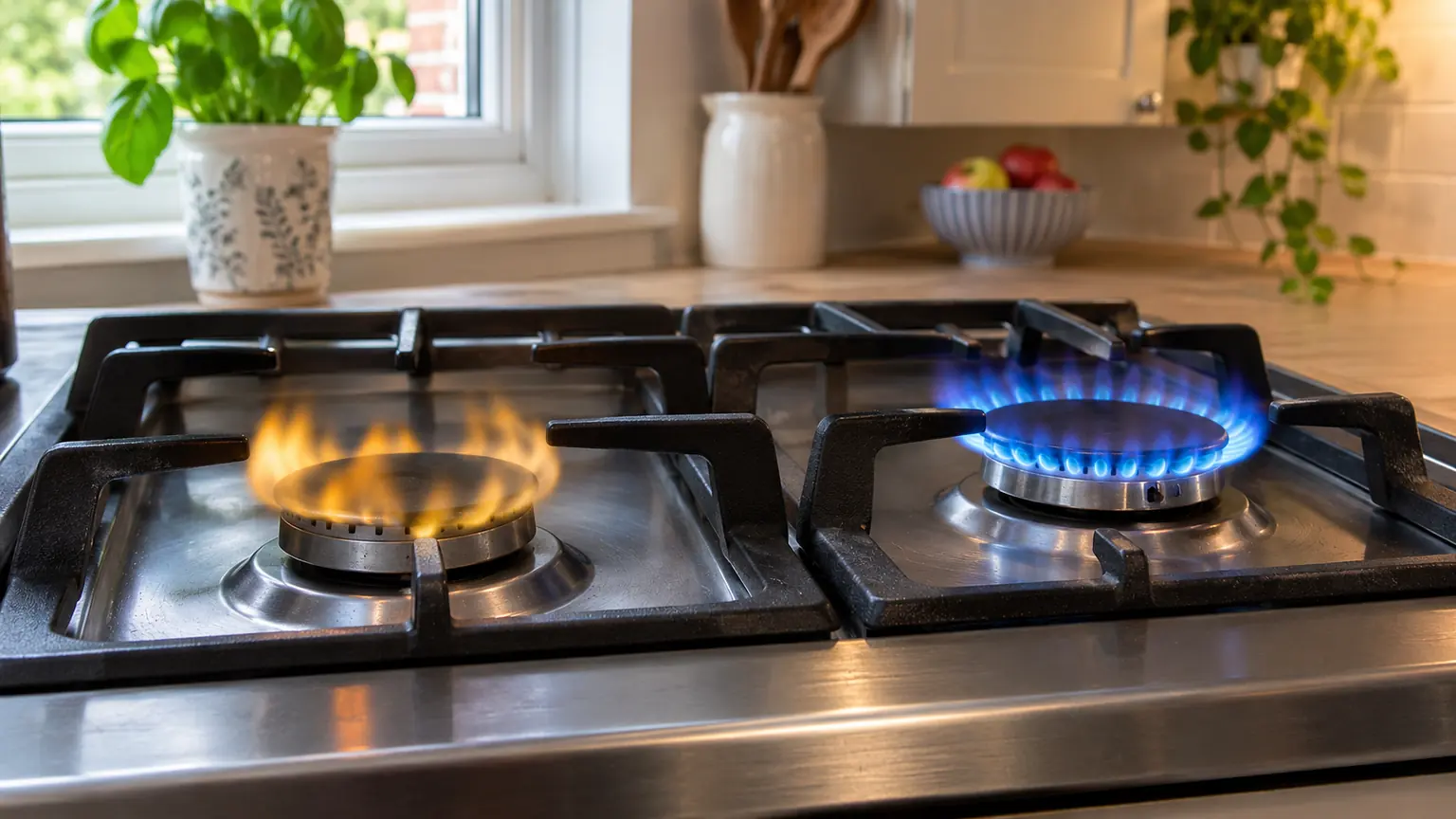
A domestic gas hob, boiler or heater that normally burns with a crisp blue flame should not suddenly develop a soft yellow or orange flame. HSE lists that colour change as a possible sign of incomplete combustion, which can produce carbon monoxide. The gas itself is not turning into carbon monoxide because it looks yellow; the concern is that the appliance may not be burning its fuel properly.
There are exceptions. HSE specifically notes that fuel-effect fires and some flueless appliances are designed to display yellow or orange flames. The appliance instructions matter, as does any change from its normal appearance. If you are unsure, switch the appliance off and have it checked rather than using colour alone to diagnose it.
Do not dismantle a burner, adjust the gas-air mixture, block a warning alarm or keep using a suspect appliance to see whether the flame improves. Gas work in a home must be done by an engineer who is Gas Safe registered and qualified for that type of appliance.
What blue and yellow gas flames can tell you
A normal flame on many domestic gas appliances is steady, compact and predominantly blue. That appearance is consistent with the gas mixing with enough air and burning as the appliance was designed to burn. A brief orange flicker caused by dust in the air is not the same as a persistent lazy flame across the burner, but a householder should not attempt to prove the cause by changing the appliance.
A persistent yellow or orange flame matters most when it is unexpected or accompanied by another warning sign. Gas Safe Register and HSE advise looking out for black soot or yellow-brown staining around an appliance, a pilot light that repeatedly goes out, and increased condensation on windows. One sign does not identify the exact fault, but several together strengthen the case for stopping use immediately.
Use the manufacturer’s instructions to understand the intended flame. Decorative gas fires often use yellow flames to imitate a solid-fuel fire, while a hob burner would normally be blue. Even on a decorative appliance, new soot, staining, an unreliable pilot light, unusual condensation or a carbon monoxide alarm should not be dismissed as part of the effect.
| What you see | What it may mean | What to do |
|---|---|---|
| Steady, crisp blue flame | Often normal for a hob, boiler or heater | Keep following the appliance instructions and service schedule |
| Persistent lazy yellow or orange flame | Possible incomplete combustion if that colour is not designed in | Stop using the appliance and arrange a Gas Safe check |
| Designed yellow flame on a fuel-effect fire | May be normal for that appliance | Check the instructions; act on any new soot, staining or other warning sign |
| Any flame plus a CO alarm or illness | Possible carbon monoxide exposure | Go outside and seek emergency and medical advice |
Flame colour is a warning clue, not a safe do-it-yourself diagnostic test.
What to do when a gas flame looks wrong
First, turn off the affected appliance if you can do so without putting yourself at risk. Do not relight it. Open doors and windows if you suspect fumes or carbon monoxide, and get everyone into fresh air if anyone feels unwell or a carbon monoxide alarm sounds. Do not return to the building until you have received professional advice.
If there is a smell of gas, a suspected gas leak or suspected carbon monoxide from a gas appliance, use the emergency route rather than waiting for a routine service appointment. In England, Scotland and Wales, call the National Gas Emergency Service on 0800 111 999. In Northern Ireland, call the Northern Ireland Gas Emergency Service on 0800 002 001. For LPG, contact the LPG supplier using its emergency instructions.
If there is no immediate emergency but the flame remains abnormal, arrange a visit from a Gas Safe registered engineer. Use the official register to find or check the engineer, then confirm the ID card covers the relevant appliance category. Leave the appliance off until it has been assessed and any defect has been put right.
- Do not keep testing it: repeated relighting can expose the household to more combustion products.
- Do not repair it yourself: cleaning inside, altering shutters or changing gas settings is gas work, not household maintenance.
- Do not block ventilation: air vents and flues are part of safe appliance operation.
- Do keep evidence: if safe, note which appliance was affected and what changed, but do not delay leaving or calling for help to take a photograph.
Know the signs of carbon monoxide exposure
Carbon monoxide has no colour or smell, so a yellow flame is not a substitute for a working alarm. NHS guidance lists headache, dizziness, nausea or vomiting, weakness, tiredness and confusion, chest or muscle pain, shortness of breath and loss of vision among the possible symptoms. Symptoms can become worse inside an affected building and improve after going outside.
If you think you may have carbon monoxide poisoning, stop using the suspected appliance if you can, go outside and get medical advice promptly. Call NHS 111 if you think you have symptoms. Call 999 or go to A&E for severe symptoms such as difficulty breathing, sudden confusion, loss of consciousness, marked weakness, or chest or muscle pain. Do not drive yourself to A&E.
Fit audible carbon monoxide alarms and follow the manufacturer’s siting, testing and replacement instructions. An alarm is an extra layer of protection, not a replacement for correct installation, ventilation and maintenance. The carbon monoxide alarm guide explains the different rules across the UK and where an alarm is useful.
What a qualified engineer may need to check
The cause cannot be confirmed from a photograph or flame colour alone. A qualified engineer may need to inspect the appliance, burner, ventilation, flue and combustion performance using appropriate tests. The right checks depend on whether the appliance is a boiler, cooker, fire, water heater or another gas appliance.
Ask the engineer what was found, whether the appliance is safe to use, and whether any part needs repair or replacement. If the appliance is labelled or disconnected as unsafe, do not reconnect or use it. Keep the written record and any test or service information with the appliance documents.
Routine maintenance reduces risk but does not make a new warning sign safe to ignore. If a service is due, use the gas boiler service guide to prepare, but describe the yellow flame as a safety concern when booking rather than treating the visit as an ordinary annual service.
Return to normal use only after the appliance is safe
Once a qualified engineer has confirmed the appliance is safe, follow the operating instructions and continue checking that vents, grilles and flues remain unobstructed. Test carbon monoxide alarms as the manufacturer directs and replace them by the marked expiry date. A normal-looking flame later does not prove that an unresolved fault has disappeared.
If the incident involved a gas smell, use the separate gas-smell emergency guide for the immediate steps and regional numbers. If it involved a rented home, report the issue to the landlord or managing agent as well as following emergency advice; a tenant should not be asked to use an appliance suspected of being unsafe.
After the safety issue is resolved, compare readings and tariff rates in the gas bill calculator if you want to estimate normal usage. A flame problem is not something the calculator can diagnose, and reducing a bill should never involve restricting required ventilation or continuing to use faulty equipment.
Frequently asked questions
Should a gas flame always be blue?
Many domestic hobs, boilers and heaters should have a crisp blue flame, but fuel-effect fires and some flueless appliances are designed to show yellow or orange. Check the appliance instructions and treat an unexpected change or other warning sign seriously.
Can a dirty gas hob make the flame yellow?
A burner problem may affect the flame, but colour alone cannot confirm the cause. Do not dismantle or adjust gas components. Turn off a persistently abnormal burner and ask a Gas Safe registered engineer qualified for cookers to check it.
Does a yellow flame mean carbon monoxide is definitely present?
No. It is a possible sign of incomplete combustion, not a carbon monoxide measurement. Because carbon monoxide is colourless and odourless, use a working alarm and professional checks rather than judging safety from flame colour alone.
Who should I call about a yellow gas flame?
For a non-emergency appliance check, use a Gas Safe registered engineer qualified for that appliance. If you smell gas or suspect carbon monoxide from a gas appliance, call 0800 111 999 in Great Britain or 0800 002 001 in Northern Ireland.
Can I use the appliance if the yellow flame goes blue again?
A temporary return to blue does not explain an unexpected persistent or recurring change. If you suspect the appliance is unsafe, leave it off until a qualified engineer has checked it.
Sources
Rates and rules checked on 15 November 2026. Time-sensitive figures should be checked again before use.