
At a glance
The short answer: diagnose the cold pattern first
If a radiator is cold at the top but warm at the bottom, trapped air is a likely cause and bleeding it may restore circulation. If it is warm at the top but cold across the bottom, sludge or restricted flow is more plausible. If one radiator stays cold all over, check its thermostatic radiator valve and the other valve without forcing either. If several radiators heat at very different speeds, the system may need balancing.
Do not treat every cold radiator as an air problem. Repeatedly bleeding a system that has a leak, pressure fault or persistent air entry can hide the symptom without fixing the cause. Work only on the water-filled radiator side of the system, follow the boiler and radiator instructions, and leave boiler, flue and gas work to a suitably qualified Gas Safe registered engineer.
Start with the heating off and the radiators cool. Note which rooms are affected, where each radiator feels cold and what the boiler pressure display shows. That short survey is safer and more useful than opening every bleed valve in the house.
Match the symptom to the next sensible check
Run the heating from cold for long enough to see a pattern, but do not touch hot pipework. Check every radiator rather than focusing only on the cold room. A single cold top, a group of slow radiators and a boiler that will not run point to different problems.
These patterns are clues rather than a remote diagnosis. Valve faults, pump settings, blockages, system design and boiler controls can produce similar symptoms. Stop if a valve will not move normally, water appears, the boiler reports a fault or you are unsure which control you are touching.
| What you notice | Likely area to check | First action |
|---|---|---|
| Cold at the top, warmer below | Trapped air | Bleed when cool, following the radiator instructions |
| Cold at the bottom, warmer above | Sludge or restricted circulation | Ask a heating engineer to assess the system |
| One radiator cold all over | Closed or stuck valve, local blockage | Check normal valve settings; do not force them |
| Near radiators hot, distant ones slow | System balance | Record warm-up order and consider professional balancing |
| Several radiators cold and boiler pressure low | System pressure or leak | Check the manual and look for visible water; get help if it repeats |
A cold pattern cannot prove the cause. Manufacturer instructions and an in-person assessment take priority.
How to bleed a radiator without creating another problem
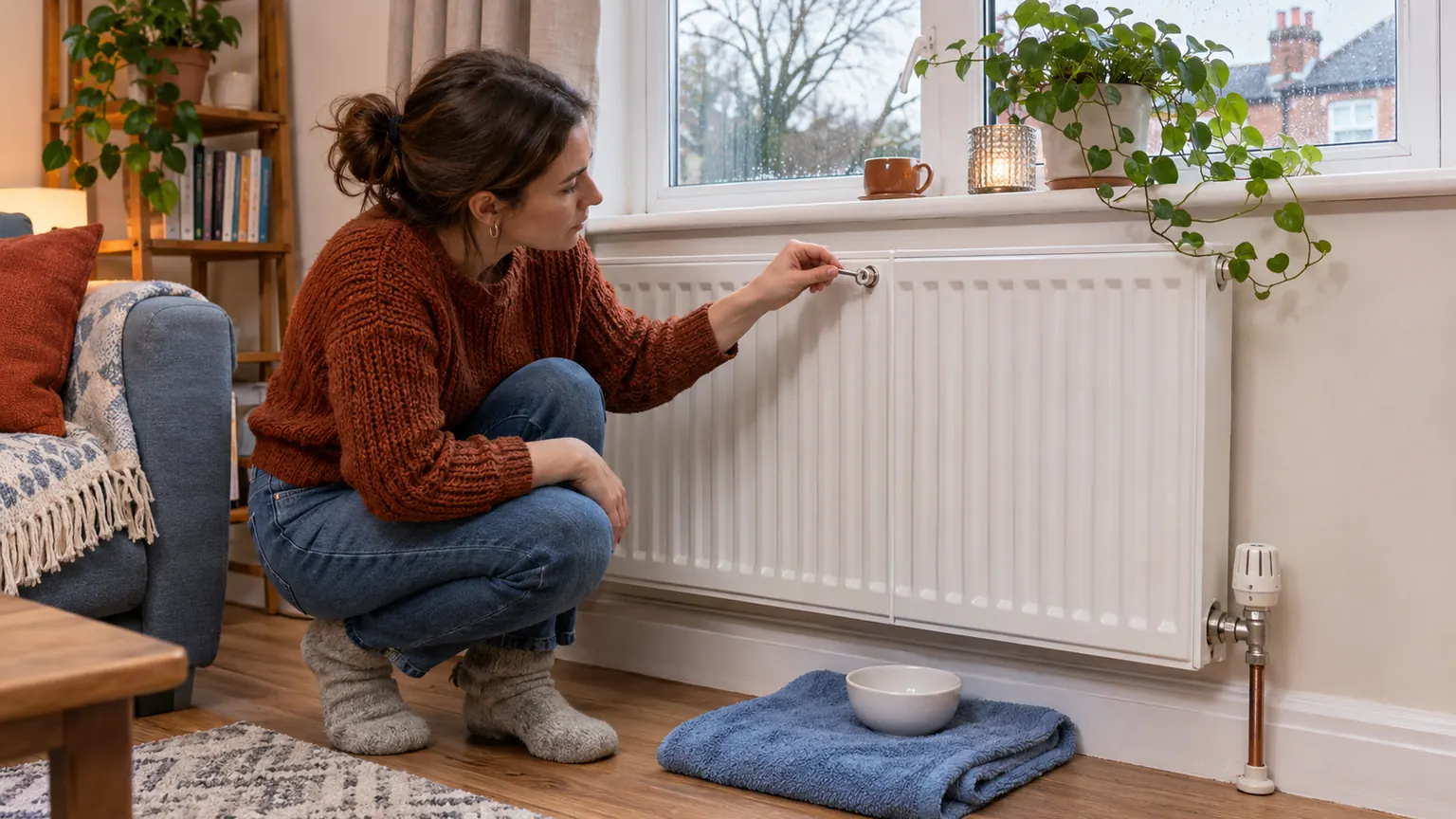
Energy Saving Trust advises turning the heating off and allowing radiators to cool before bleeding. Put an old towel beneath the valve and hold a small bowl or jug below it. Insert the correct radiator key and turn slowly by only about a quarter or half turn. You should hear air hiss out. Close the valve as soon as the hissing stops or water starts to appear.
Do not remove the bleed screw, leave the valve open or use excessive force. Wipe the area dry and check that it does not continue to seep. After bleeding, check the boiler pressure against the manufacturer’s instructions before restarting the heating. Bleeding can lower the pressure in a sealed system, but the correct range and repressurising method depend on the boiler.
Our boiler pressure guide explains how to read the display safely. If you do not have the exact manual, cannot identify the filling controls or pressure falls again, ask a heating engineer rather than guessing.
- Switch off: let the heating and radiators cool fully.
- Protect: place a towel and container under the bleed valve.
- Open slowly: use the correct key for a quarter or half turn.
- Close promptly: stop when the hiss ends or water appears.
- Recheck: inspect for seepage and read the boiler pressure.
When the system may need balancing instead
Balancing adjusts water flow so radiators around the system warm at a more even rate. The government’s Heat and Buildings Strategy describes hydraulic balancing as the practice of making radiators heat at the same rate and says a balanced system can support efficient operation. It is different from bleeding: bleeding releases trapped air, while balancing changes flow through radiator valves.
A typical clue is that radiators close to the boiler become hot quickly while those farther away stay cooler for much longer. Before assuming the system is unbalanced, make sure the room thermostat is calling for heat, the programmer is on, thermostatic radiator valves are not deliberately set low and furniture or curtains are not blocking heat into the room. Our central heating controls guide explains what each control should do.
Proper balancing is iterative and depends on the system design. Randomly opening every lockshield valve can make the distribution worse and erase useful settings. Record the warm-up order and ask a competent heating engineer to balance the system if the problem affects several rooms or returns after radiators have been removed or replaced.
Treat falling pressure, leaks and repeated air as warning signs
A small pressure change after bleeding can be expected in a sealed system. A sudden fall, a display that repeatedly drops below the boiler’s stated range or a need to top up again and again is not something to normalise. Energy Saving Trust says sudden pressure loss can indicate a leak in a radiator or the heating system and should be inspected.
Look without dismantling anything: check beneath radiator valves, visible pipe joints and the boiler area for drips, staining or damp. Do not remove the boiler case. If water is escaping, protect flooring, switch the heating off if the manufacturer’s instructions say it is safe, and contact a heating engineer. If the issue involves the boiler itself, use a Gas Safe registered engineer qualified for that work.
A water leak from a radiator circuit is different from a gas leak. If you smell gas or suspect a gas appliance is unsafe, do not continue troubleshooting the radiator. Follow the emergency advice in our gas smell guide and call the National Gas Emergency Service on 0800 111 999.
Check gas use after comfort is restored
A balanced, responsive heating system can reduce waste caused by overheating some rooms while waiting for others to warm, but there is no honest fixed saving for bleeding or balancing a radiator. Weather, thermostat settings, occupancy and the length of each heating period can move gas use far more than the maintenance change itself.
Use a simple comparison. Take a gas meter reading at the same time on two similar days, note the weather and keep the timer and thermostat unchanged. Repeat after the radiator problem is corrected. Convert each interval with the gas units to kWh guide, or enter the readings, dates and tariff in the gas bill calculator. Treat the result as a household check, not a laboratory test.
For example, if one 24-hour period uses 52 kWh and a comparable later period uses 47 kWh, the measured difference is 5 kWh. At an illustrative 7.97p per kWh, that is about 40p before any standing charge: 5 × £0.0797 = £0.3985. One comparison cannot prove the radiator work caused the change, so look for a repeated pattern across several similar days.
| Period | Gas use | Usage cost at 7.97p/kWh |
|---|---|---|
| Before the correction | 52 kWh | £4.14 |
| After the correction | 47 kWh | £3.75 |
| Measured difference | 5 kWh | £0.40 |
The rate is the Great Britain average Direct Debit gas unit rate under the 1 October to 31 December 2026 price cap, including VAT. Regional and tariff rates vary. Standing charge is excluded because it is unchanged by daily use.
Know when to stop and get professional help
Arrange an inspection when a radiator remains cold after the basic checks, the bottom stays cold, valves leak or will not move normally, pressure repeatedly falls, air returns quickly, the boiler locks out or several rooms never heat properly. A heating engineer can check circulation, valves, pump operation, sludge and system balance rather than treating one symptom at a time.
Use a Gas Safe registered engineer for work on the gas boiler, its controls, flue or gas pipework. HSE says anyone employed to work on a domestic gas appliance must be Gas Safe registered and competent for that area. Routine radiator “wet work” is not automatically gas work, but the final connection to the boiler and work on the boiler itself are restricted.
Keep a note of the cold pattern, boiler pressure when cool, fault codes, visible leaks and what changed after bleeding. That evidence helps the engineer diagnose the system and avoids repeated trial and error. If the boiler is due its annual check, the gas boiler service guide explains what to ask before booking.
Frequently asked questions
Why is my radiator cold at the top?
Trapped air is a common cause. Turn the heating off, let the radiator cool and follow its instructions to bleed it slowly. If air returns quickly or pressure keeps falling, arrange an inspection.
Why is my radiator cold at the bottom?
A cold bottom is more consistent with restricted circulation or sludge than trapped air. Bleeding is unlikely to remove sludge, so ask a heating engineer to assess the system.
Should I bleed radiators when they are hot or cold?
Cold. Switch the heating off and allow radiators to cool before opening a bleed valve. This reduces the risk from hot water and stops the pump drawing more air into the system.
Do I need to bleed every radiator?
Not automatically. Check the pattern across the system and bleed only radiators showing signs of trapped air, unless the manufacturer or your heating engineer advises otherwise.
Will bleeding radiators reduce my gas bill?
It can help a radiator transfer heat properly, but there is no fixed guaranteed saving. Compare meter use across similar days while keeping heating settings consistent.
Is balancing radiators the same as bleeding them?
No. Bleeding releases trapped air. Balancing adjusts water flow through the radiator valves so the system warms more evenly.
Sources
Rates and rules checked on 6 November 2026. Time-sensitive figures should be checked again before use.